Mastering Scratch Geometry Dash: A Comprehensive Guide
📋 In this guide
Scratch Geometry Dash is a fascinating aspect of geometry that challenges students in unique and engaging ways. This interactive approach combines the principles of geometry with the addictive gameplay mechanics of Geometry Dash, a popular rhythm-based platformer game. While Scratch Geometry Dash offers an exciting way to learn, many students struggle with it because it requires both spatial reasoning and a good grasp of mathematical concepts. By exploring Scratch Geometry Dash, students will not only improve their geometry skills but also enhance their problem-solving abilities in a fun and interactive environment.
For students, tackling Scratch Geometry Dash might feel overwhelming at first. The game-like setup means that success depends on understanding geometric principles and applying them in an interactive setting. This requires a blend of creativity and analytical thinking, which can be challenging for those used to traditional math problems. However, with the right guidance and practice, Scratch Geometry Dash can transform from a source of frustration into a powerful learning tool.
In this guide, we'll walk you through everything you need to know about Scratch Geometry Dash. From key formulas and step-by-step instructions to worked examples and common mistakes, you'll gain a comprehensive understanding of how to tackle these challenges head-on. Whether you're dealing with scratch geometry dash wave or exploring the nuances of scratch geometry dash meltdown, this guide will equip you with the knowledge and confidence to succeed.
Step-by-Step: How to Solve Scratch Geometry Dash
Step 1: Understanding the Basics
Before diving into Scratch Geometry Dash, it's important to ensure you have a strong foundation in basic geometry concepts. Focus on mastering the properties of shapes like triangles, squares, rectangles, and circles. Understanding the relationships between different geometric figures is crucial. For example, knowing how to calculate the perimeter and area of these shapes will be instrumental when tackling more complex problems within Scratch Geometry Dash.
Step 2: Familiarizing with the Gameplay
The unique aspect of Scratch Geometry Dash is its gameplay element. Familiarize yourself with how the game works, which involves navigating through levels by jumping over obstacles and avoiding traps. This is where understanding geometric principles becomes practical. You'll need to calculate angles, distances, and trajectories to succeed. For those exploring scratch geometry dash wave or trying their hand at scratch geometry dash subzero, recognizing patterns and using geometry to predict movements is key.
Step 3: Applying Mathematical Concepts
Once you're comfortable with the basics and the gameplay, start applying mathematical concepts to solve problems within the game. For example, when faced with obstacles, use your knowledge of angles and distances to calculate the best path forward. If you're dealing with scratch geometry dash v1 5 or exploring scratch geometry dash sub zero, focus on how different geometric shapes interact with each other in a dynamic environment. Practice problems that require calculating perimeters, areas, and arc lengths to reinforce these concepts.
Step 4: Practicing Problem-Solving
Like any skill, proficiency in Scratch Geometry Dash comes with practice. Set aside time to work through problems and challenges, progressively increasing the difficulty as you become more confident. Utilize resources like our complete Geometry guide on MathSolver.cloud to find practice problems and solutions. Additionally, explore the MathSolver Chrome extension for instant step-by-step solutions, allowing you to learn and correct mistakes in real time.
🤖 Stuck on a math problem?
Take a screenshot and let our AI solve it step-by-step in seconds
⚡ Try MathSolver Free →Worked Examples
Example 1
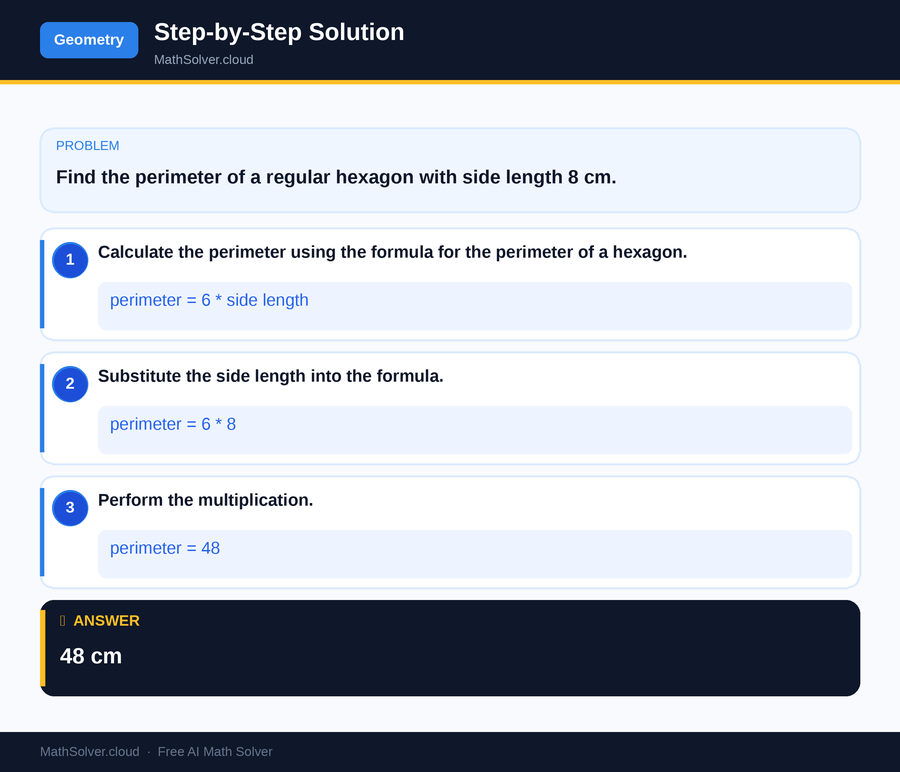
MathSolver Chrome extension solving this problem step-by-step
Example 2
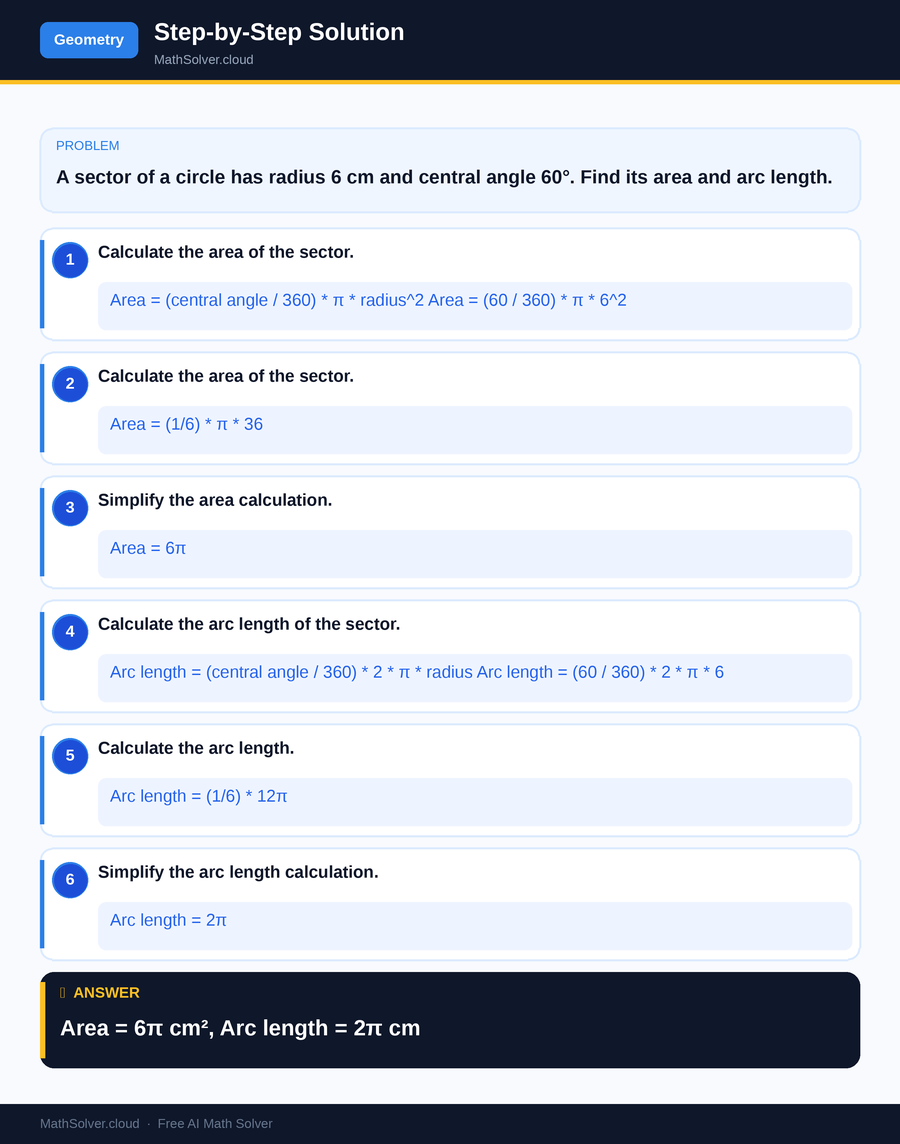
MathSolver Chrome extension solving this problem step-by-step
Common Mistakes to Avoid
One common mistake students make with Scratch Geometry Dash is confusing the properties of different geometric shapes. For instance, mixing up formulas for the area and perimeter can lead to incorrect results. To avoid this, always double-check which formula is applicable to the problem at hand. Another error is neglecting units, especially in problems involving lengths and areas. Always ensure your final answers include the correct units of measurement.
Another frequent mistake is underestimating the importance of visualizing geometric problems. In Scratch Geometry Dash, a clear mental picture of the problem can significantly aid in finding the solution. Practice sketching diagrams or using digital tools to visualize problems, which can help reinforce your understanding and prevent errors.
Real-World Applications
Scratch Geometry Dash isn't just a fun game; it has real-world applications that extend beyond the classroom. For example, architects and engineers often use similar geometric principles when designing buildings and structures. Understanding how different shapes interact can help them create stable and aesthetically pleasing designs. Additionally, game developers might use these concepts to create engaging and challenging levels in video games.
Another real-world application is in robotics and animation, where geometry is crucial for programming movements and interactions. By mastering Scratch Geometry Dash, students can develop a deeper understanding of these principles, which can be applied in fields like computer graphics, animation, and robotics, where spatial reasoning is key.
Frequently Asked Questions
❓ What exactly is Scratch Geometry Dash?
❓ Why do students find Scratch Geometry Dash difficult?
❓ How can AI help with Scratch Geometry Dash?
❓ What is the difference between scratch geometry dash wave and scratch geometry dash meltdown?
❓ How can I use Scratch Geometry Dash to improve my geometry skills?
🚀 Solve any math problem instantly
2,000+ students use MathSolver every day — join them for free
📥 Add to Chrome — It's Free