Mastering Geometry Dash Breeze
📋 In this guide
Geometry Dash Breeze is an intriguing level within the popular game Geometry Dash that often leaves players scratching their heads. This level, like many others in the game, combines fast-paced challenges with intricate geometric patterns that require quick thinking and precision. Students and players alike often struggle with Geometry Dash Breeze due to its complex sequences and the need for a solid understanding of geometric principles to navigate successfully.
As you dive into this article, you will gain a comprehensive understanding of Geometry Dash Breeze, learn how to tackle its challenges, and apply geometric concepts to improve your gameplay.
At its core, mastering Geometry Dash Breeze involves understanding fundamental geometry concepts such as shapes, angles, and distances. Players must quickly interpret and react to various geometric obstacles, which can be daunting without a clear strategy or familiarity with the underlying math. This article aims to demystify the level by breaking down the essential geometry components, providing step-by-step guides, and offering practical tips to enhance your skills.
Step-by-Step: How to Solve Geometry Dash Breeze
Step 1: Understanding the Basics
Before diving into Geometry Dash Breeze, it's essential to have a solid understanding of basic geometry concepts. Familiarize yourself with different shapes and their properties, such as triangles, circles, and squares. Understand how to calculate angles and the relationships between different geometric figures. This foundational knowledge will help you recognize patterns and anticipate obstacles in the game, allowing for quicker and more accurate responses.
Step 2: Analyzing the Level Layout
Take some time to study the layout of Geometry Dash Breeze. Break down the level into smaller sections and identify the types of geometric challenges you will face. Look for patterns in the shapes and obstacles, as recognizing these patterns will help you devise strategies for each segment. Consider practicing these sections individually to build confidence and improve your timing and precision.
Step 3: Applying the Distance Formula
The distance formula is a powerful tool in Geometry Dash Breeze. Use it to calculate the distances between key points in the level, helping you to anticipate jumps and avoid obstacles. Practice using the formula with different sets of points to become more comfortable with it. By knowing how far apart points are, you'll be better equipped to make quick decisions and maintain the necessary pace throughout the level.
Step 4: Practicing and Refining Your Skills
The key to mastering Geometry Dash Breeze is practice. Repeatedly play the level to refine your skills and improve your reaction times. Focus on specific areas where you struggle and apply the geometric principles you've learned to overcome these challenges. Additionally, consider watching tutorials or seeking advice from experienced players to gain new insights and techniques. With persistence and dedication, you'll find yourself progressing through the level with greater ease.
🤖 Stuck on a math problem?
Take a screenshot and let our AI solve it step-by-step in seconds
⚡ Try MathSolver Free →Worked Examples
Example 1
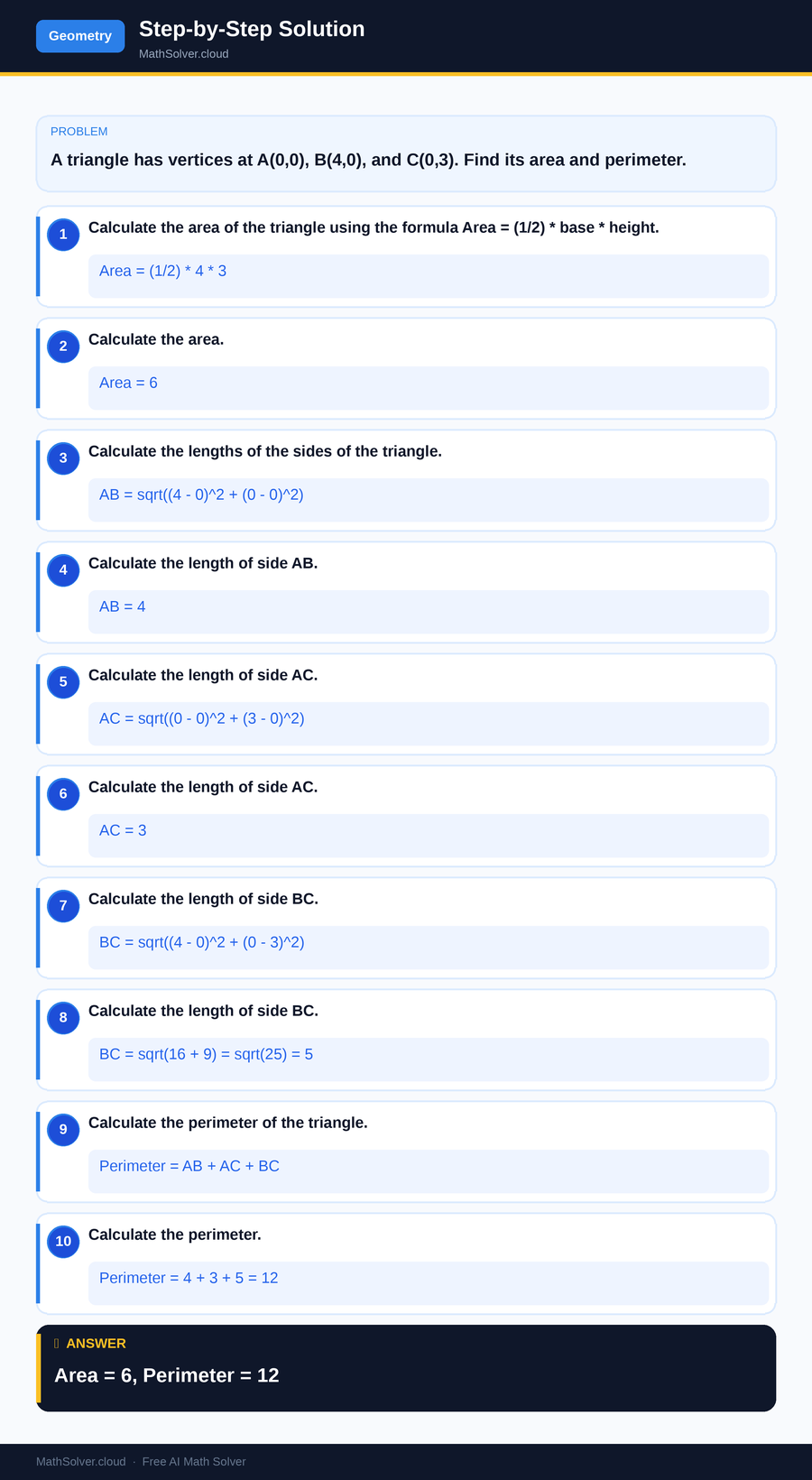
MathSolver Chrome extension solving this problem step-by-step
Example 2

MathSolver Chrome extension solving this problem step-by-step
Common Mistakes to Avoid
One common mistake students make when tackling Geometry Dash Breeze is misapplying the distance formula. Ensure you correctly substitute the coordinates into the formula and carefully perform the calculations to avoid errors.
Another frequent error is neglecting to practice regularly, which can lead to a lack of familiarity with the level's patterns and timing. Consistent practice is vital for improving your skills and overcoming challenging sections.
Additionally, students often overlook the importance of analyzing the level layout before attempting it. By breaking down the level into manageable parts and studying the geometric patterns, you can develop effective strategies and make more informed decisions during gameplay. Avoid rushing through the level without a clear plan, as this often leads to unnecessary mistakes and frustration.
Real-World Applications
Geometry Dash Breeze, while a virtual challenge, has real-world applications in developing problem-solving and critical thinking skills. The game's requirement to quickly interpret and react to geometric patterns mirrors real-life situations where spatial awareness and geometry are crucial. For instance, architects and engineers often rely on geometric principles to design and construct buildings and structures.
Moreover, the skills honed in Geometry Dash Breeze can be applied to various fields such as computer graphics and animation, where understanding geometric transformations and spatial relationships is essential. By mastering the geometric concepts in the game, players can enhance their ability to visualize and manipulate shapes, which is valuable in these professions.
Frequently Asked Questions
❓ What is Geometry Dash Breeze and why is it challenging?
❓ How can I improve my skills in Geometry Dash Breeze?
❓ How can AI help with Geometry Dash Breeze?
❓ What are some common mistakes to avoid in Geometry Dash Breeze?
❓ How does understanding geometry help in real life?
🚀 Solve any math problem instantly
2,000+ students use MathSolver every day — join them for free
📥 Add to Chrome — It's Free