Conquer Geometry Dash Scratch: A Comprehensive Guide
📋 In this guide
Geometry Dash Scratch is an intriguing blend of creativity and problem-solving that captivates many students and gaming enthusiasts alike. However, despite its engaging nature, students often find themselves tangled in its complexities. The game requires not only rapid reflexes but also a solid understanding of geometric principles, making it a challenging yet rewarding experience. This article will guide you through the intricacies of Geometry Dash Scratch, helping you conquer common hurdles and master the skills needed to excel.
In Geometry Dash Scratch, players navigate through levels filled with obstacles, relying on geometric concepts to make precise moves. Unfortunately, without a clear understanding of the underlying geometry, many players struggle with timing and spatial awareness. This can lead to frustration and hinder progress. By demystifying the key concepts and providing structured guidance, we aim to enhance your skills and enjoyment of the game.
Through step-by-step instructions, worked examples, and practical tips, you'll discover how Geometry Dash Scratch can become an enjoyable learning tool. We will also explore related variations, such as Geometry Dash Scratch Wave and Geometry Dash Scratch Subzero, to provide a comprehensive understanding of the game. Get ready to transform your approach to this exciting challenge!
Step-by-Step: How to Solve Geometry Dash Scratch
Step 1: Understanding the Basics
Before diving into the complexities of Geometry Dash Scratch, it's essential to grasp the foundational principles of geometry. Familiarize yourself with basic shapes such as triangles, rectangles, and circles, and learn how to calculate their areas and perimeters. This knowledge will be instrumental as you progress through the levels, allowing you to anticipate and react to obstacles efficiently.
Step 2: Analyzing Level Design
In Geometry Dash Scratch, each level is meticulously designed with geometric shapes and patterns. Start by observing the layout of the level before making any moves. Look for recurring patterns and shapes, and consider how they interact with the gameplay mechanics. By analyzing the level design, you can identify potential challenges and plan your moves strategically.
Step 3: Timing and Precision
Success in Geometry Dash Scratch requires impeccable timing and precision. As you navigate through the levels, pay close attention to the timing of your movements. Practice maintaining a consistent rhythm and adjusting your speed to match the pace of the level. Precision is key, as even a slight miscalculation can lead to failure. With practice, you'll develop the reflexes needed to tackle even the most challenging sections.
Step 4: Utilizing Geometry Dash Scratch Tools
Take advantage of the tools available in Geometry Dash Scratch to enhance your gameplay experience. Features like the Geometry Dash Scratch Wave allow you to experiment with different wave patterns and improve your control over movements. Additionally, exploring versions like Geometry Dash Scratch V1 5 and Geometry Dash Scratch MIT can offer new perspectives and challenges. These tools not only provide variety but also help refine your skills.
🤖 Stuck on a math problem?
Take a screenshot and let our AI solve it step-by-step in seconds
⚡ Try MathSolver Free →Worked Examples
Example 1
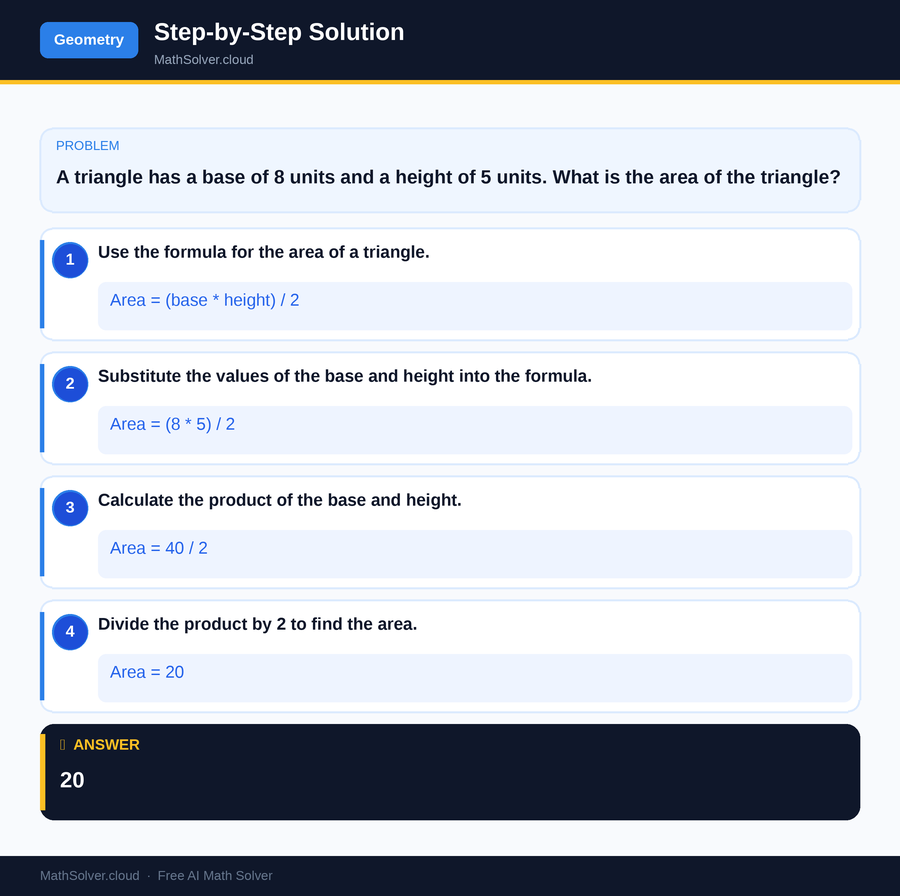
MathSolver Chrome extension solving this problem step-by-step
Example 2
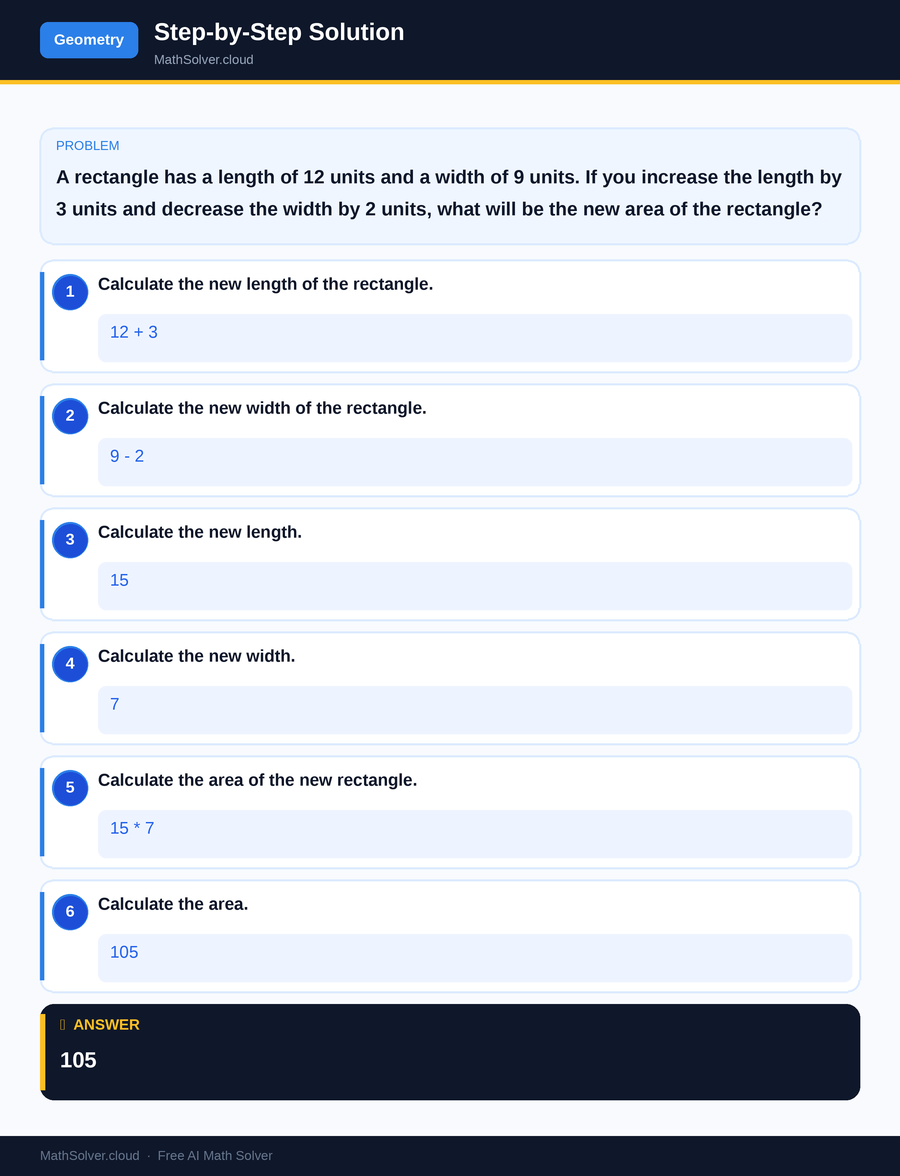
MathSolver Chrome extension solving this problem step-by-step
Common Mistakes to Avoid
One common mistake students make in Geometry Dash Scratch is neglecting the importance of spatial awareness. Players often focus solely on the immediate obstacles, failing to anticipate upcoming challenges. To avoid this, practice observing the entire level layout and plan your moves ahead of time. This strategic approach will significantly enhance your gameplay experience.
Another frequent error is miscalculating the dimensions and properties of geometric shapes. Ensure that you have a solid understanding of geometry lessons and regularly practice solving problems involving shapes and their properties. This will help you make informed decisions during gameplay and avoid costly mistakes.
Real-World Applications
Geometry Dash Scratch isn't just about gaming; it has practical applications in various fields. For instance, architects and engineers often use geometric principles to design and analyze structures. Understanding geometry can also benefit those interested in game design, as it allows for the creation of intricate and engaging levels.
Additionally, the problem-solving skills developed through Geometry Dash Scratch are valuable in everyday life. Whether you're calculating the area of a room for renovation or planning a garden layout, the ability to apply geometric concepts can simplify these tasks and lead to more efficient solutions.
Frequently Asked Questions
❓ What is Geometry Dash Scratch?
❓ Why do students struggle with Geometry Dash Scratch?
❓ How can AI help with Geometry Dash Scratch?
❓ What is the Geometry Dash Scratch Wave?
❓ How can I improve my skills in Geometry Dash Scratch?
🚀 Solve any math problem instantly
2,000+ students use MathSolver every day — join them for free
📥 Add to Chrome — It's Free