Mastering the Equation for Velocity
📋 In this guide
The equation for velocity is a fundamental concept in physics, often posing challenges for students trying to grasp its intricacies. Velocity is not just about speed; it includes direction, making it a vector quantity. This distinction is crucial, yet many learners struggle with understanding how to apply the equation for velocity in various scenarios. Throughout this article, we'll delve into the equation for velocity, breaking it down into digestible steps to make it easier to understand and apply. Whether you're dealing with everyday problems or complex physics questions, mastering this concept is essential.
Students frequently find themselves puzzled by the equation for velocity because it involves both magnitude and direction. Unlike speed, which is a scalar quantity, velocity requires consideration of the object's path, making calculations slightly more complex. Furthermore, velocity can change, adding layers to its equation that often trip up even the most diligent learners. By the end of this article, you will have a clear understanding of how to calculate velocity in various contexts, helping you to overcome these common hurdles.
Understanding the equation for velocity is crucial for solving numerous physics problems and real-world applications. From calculating the speed of a car to understanding the motion of celestial bodies, velocity plays a vital role. In this comprehensive guide, we'll explore the primary formula, break down the calculation process into manageable steps, and provide examples to illustrate how the equation is applied. Whether you're preparing for an exam or simply curious about physics, this article will guide you through the essentials of velocity.
Step-by-Step: How to Solve Equation For Velocity
Step 1: Understand the Variables
The equation for velocity involves two main variables: displacement and time. Displacement is different from distance as it considers the direction of movement, making it a vector quantity. Time is the duration over which the movement occurs. Understanding these variables is crucial because they form the foundation of the velocity calculation. When you break down a physics problem, start by identifying these two key elements to ensure you apply the formula correctly.
Step 2: Convert Units if Necessary
Before performing calculations, it's vital to ensure that all units are consistent. This means converting units where necessary, such as changing minutes to seconds or kilometers to meters. Consistent units are essential for accurate results, as mismatched units can lead to incorrect calculations. For instance, if displacement is given in meters and time in seconds, the resulting velocity will be in meters per second (m/s).
Step 3: Apply the Formula
Once you have identified the displacement and time and ensured consistent units, apply the formula: velocity = displacement/time. This involves dividing the total displacement by the total time taken to complete the movement. This step is straightforward but requires careful attention to detail to avoid errors, especially in complex problems where multiple steps are involved.
Step 4: Consider the Direction
Finally, remember that velocity is a vector quantity, meaning it has a direction. When calculating velocity, it's crucial to indicate the direction of the movement, such as north, south, east, or west. This step is often overlooked but is essential for a complete understanding of velocity. In problems involving the equation for velocity in physics, direction can significantly impact the final result.
🤖 Stuck on a math problem?
Take a screenshot and let our AI solve it step-by-step in seconds
⚡ Try MathSolver Free →Worked Examples
Example 1
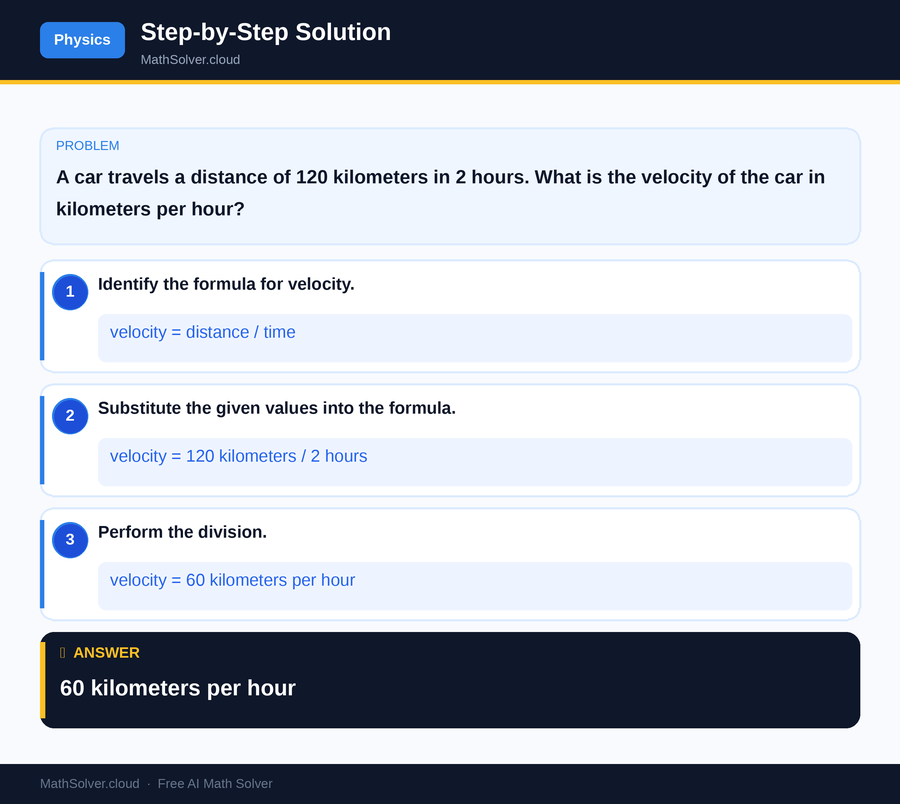
MathSolver Chrome extension solving this problem step-by-step
Example 2
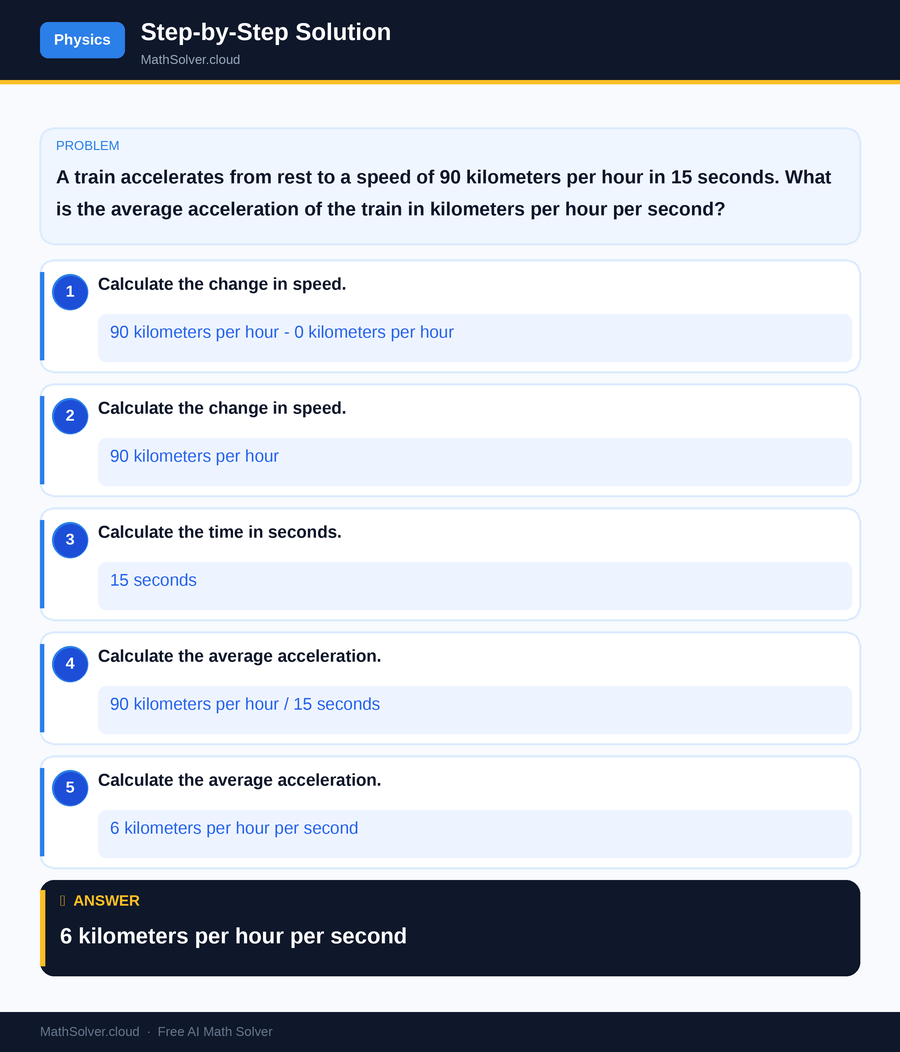
MathSolver Chrome extension solving this problem step-by-step
Common Mistakes to Avoid
One common mistake students make when working with the equation for velocity is confusing displacement with distance. Displacement considers direction, while distance does not. This misunderstanding can lead to incorrect calculations, especially when direction changes during motion. To avoid this, always determine the net change in position and consider the path taken by the object.
Another frequent error is failing to convert units appropriately. Mixing units, such as hours with seconds or kilometers with meters, can skew results significantly. Always ensure units are consistent before performing calculations. Double-check your work to confirm that all conversions are accurate and that you're using the correct units for each variable.
Real-World Applications
The equation for velocity is useful in various real-world scenarios, from engineering to environmental science. For example, engineers use velocity calculations to design safe and efficient transportation systems, such as cars and trains. Understanding velocity helps in determining optimal speeds and routes to enhance safety and fuel efficiency.
In environmental science, the equation for velocity is used to study the movement of animals and the flow of water in ecosystems. By calculating the velocity of rivers, scientists can predict erosion patterns and the impact on surrounding habitats. This information is crucial for conservation efforts and maintaining ecological balance.
Frequently Asked Questions
❓ What is the equation for velocity and its importance in physics?
❓ Why is it important to consider direction when calculating velocity?
❓ How can AI help with the equation for velocity?
❓ What’s the difference between speed and velocity?
❓ How is the equation for velocity used in sports?
🚀 Solve any math problem instantly
2,000+ students use MathSolver every day — join them for free
📥 Add to Chrome — It's Free