Exploring the Mean Definition in Maths
📋 In this guide
The mean definition in maths refers to the arithmetic average of a set of numbers. It's a concept that is fundamental to statistics and data analysis, yet many students find it challenging to grasp. This difficulty often arises because students are not just dealing with simple numbers but with understanding what the mean represents in real-world scenarios and how it fits into broader statistical contexts. In this article, we'll explore the mean definition in maths in detail, providing you with a clear understanding of what it is, how to calculate it, and why it's important.
Understanding the mean is crucial not just for academic success but also for real-life applications such as analyzing data trends, making predictions, and solving practical problems. Whether you're tackling a maths question sheet or trying to find solutions to complex statistcal problems, knowing how to calculate and interpret the mean is essential. This article aims to break down the concept into easy-to-understand steps and examples, ensuring you gain the confidence needed to apply this knowledge effectively.
As we delve deeper, you'll learn not only the key formula for calculating the mean but also how to avoid common mistakes and apply this knowledge in various real-world contexts. Whether you're preparing for a maths exam, working on your mystatlab homework answers in statistics, or just looking to sharpen your skills, this guide offers everything you need to master the mean definition in maths.
Step-by-Step: How to Solve Mean Definition In Maths
Step 1: Gather Your Data
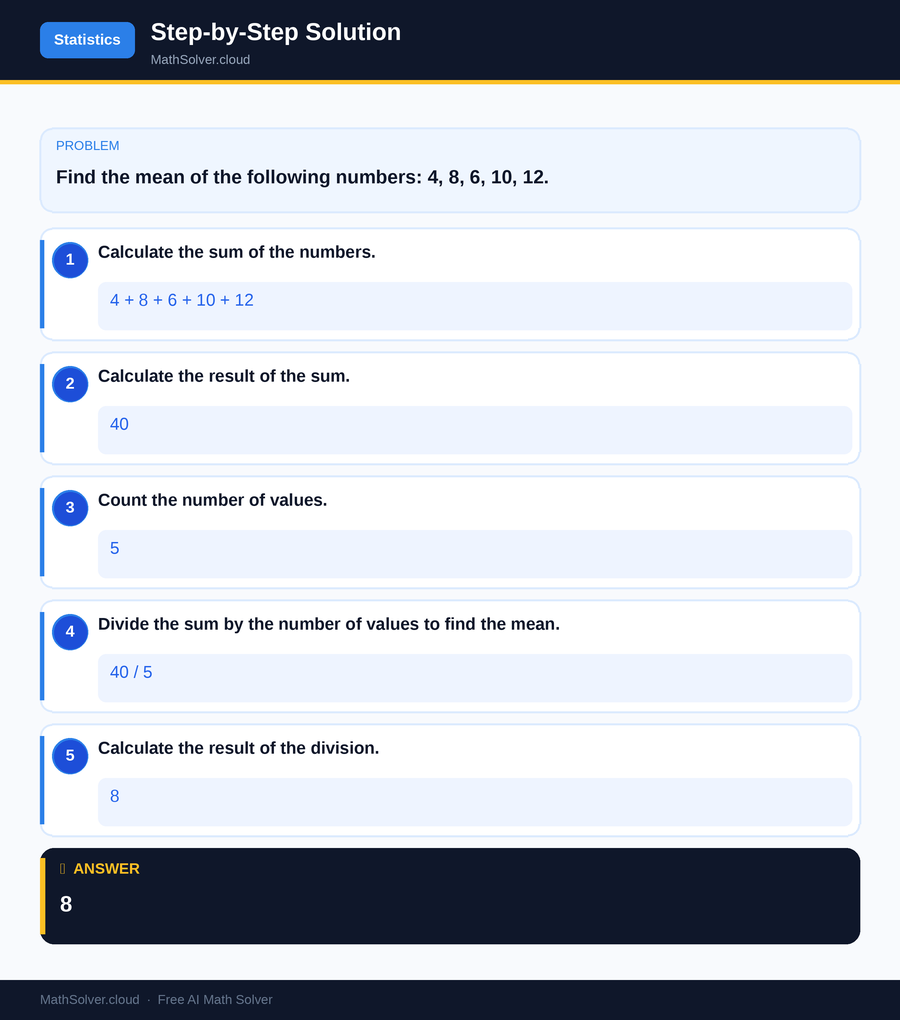
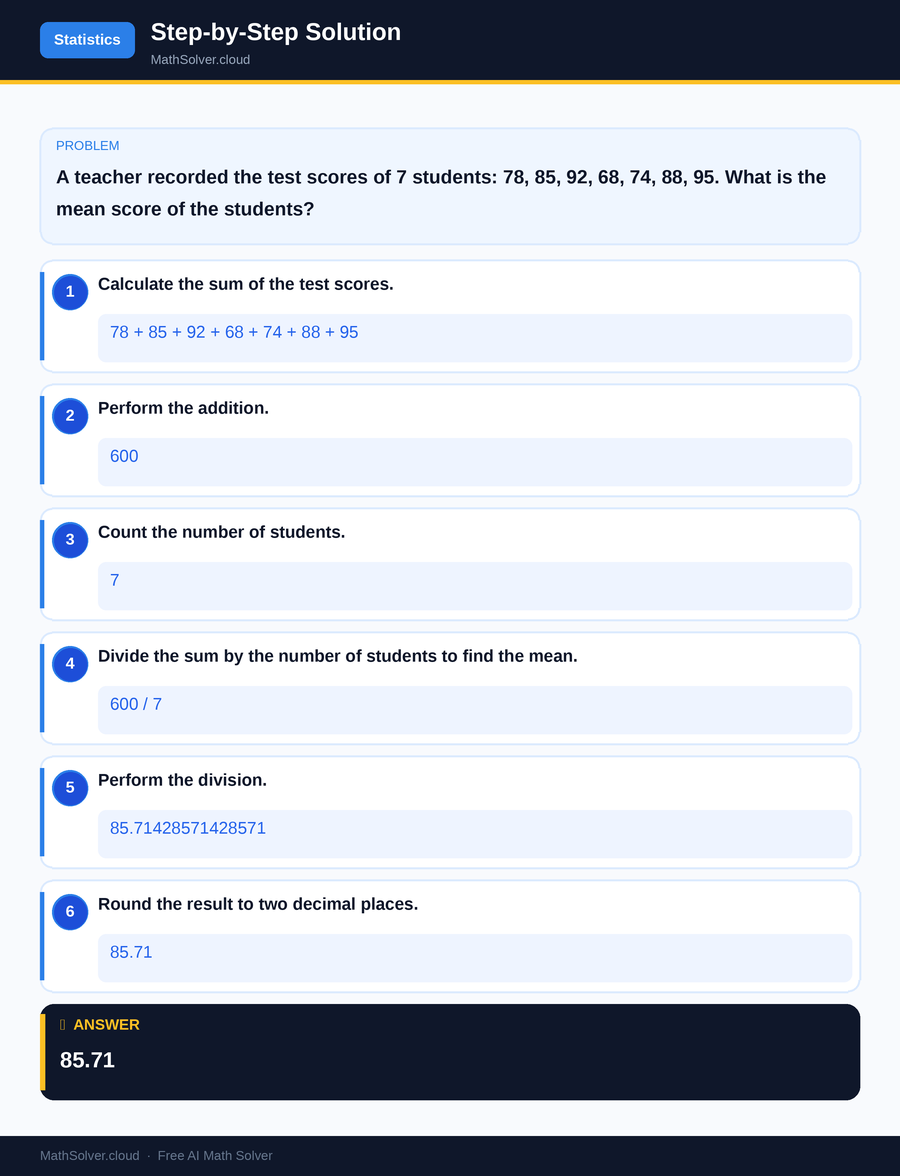
The first step in finding the mean is to gather all the data values you need to analyze. These could be test scores, ages, distances, or any other numerical data. Make sure you have a complete list of all the values, as missing data can skew your results. In practical scenarios, this might involve collecting data from a survey, experiment, or any other source.
Step 2: Sum Up the Data
Once you have your data, the next step is to add all the values together. This sum will serve as the numerator in your mean calculation. Be careful with your arithmetic here, as even a small mistake can lead to an incorrect mean. Double-check your work to ensure accuracy, especially when dealing with a large set of numbers.
Step 3: Count the Number of Values
After finding the sum, count how many data points you have. This count is your denominator in the mean formula. It's important to ensure that every value is accounted for in your count to avoid discrepancies in your final result. In exams or problmes maths, missing this step can lead to incorrect conclusions.
Step 4: Calculate the Mean
Finally, divide the sum of your data by the number of values you counted. The result is the mean of your data set. This value represents the average and gives you a sense of the typical value within your data set. Understanding how to calculate and interpret this result is key for anyone studying maths and statistics.
🤖 Stuck on a math problem?
Take a screenshot and let our AI solve it step-by-step in seconds
⚡ Try MathSolver Free →Worked Examples
Example 1
MathSolver Chrome extension solving this problem step-by-step
Example 2
MathSolver Chrome extension solving this problem step-by-step
Common Mistakes to Avoid
One common mistake students make when calculating the mean is forgetting to include all data points in their calculations. Leaving out even one number can significantly alter the result. To avoid this, always double-check your list of data points before proceeding with calculations.
Another frequent error is incorrect arithmetic when summing the data or dividing by the number of values. This can lead to a wrong mean, affecting any further analysis or conclusions drawn. Practicing arithmetic operations and using tools like a calculator or a maths solver can help minimize these errors and improve accuracy.
Real-World Applications
The mean definition in maths is widely used in various real-world applications. In business, companies use the mean to analyze sales data, helping them understand average revenue and make informed decisions. For instance, calculating the mean sales per day can help a store determine staffing needs or inventory requirements.
In education, teachers often calculate the mean test scores to gauge the overall performance of a class. This statistical measure helps in identifying trends and making decisions about curriculum adjustments. On a broader scale, the mean is crucial in fields like economics, healthcare, and sports, where it helps in interpreting data and making strategic decisions.
Frequently Asked Questions
❓ What is the mean definition in maths?
❓ Why do I need to learn about the mean in maths?
❓ How can AI help with mean definition in maths?
❓ What is the difference between mean, median, and mode?
❓ How is the mean used in data analysis?
🚀 Solve any math problem instantly
2,000+ students use MathSolver every day — join them for free
📥 Add to Chrome — It's Free