Understanding the Definition of Mean in Math
📋 In this guide
The definition of mean in math is a fundamental concept that forms the backbone of statistics and data analysis. Often referred to as the "average," the mean provides a single value that represents a set of numbers, offering a glimpse into the central tendency of the data. Despite its apparent simplicity, students frequently struggle with the definition of mean in math due to its theoretical nature and the nuances involved in different contexts. In this article, we will explore what the mean is, dissect its formula, and guide you through step-by-step examples to solidify your understanding.
Understanding the definition of mean in math is crucial for anyone venturing into the fields of statistics, economics, or any data-driven discipline. The mean is not just a simple arithmetic calculation but a tool that, when used correctly, can provide meaningful insights into data sets. However, students often find themselves confused about how to apply the mean in different scenarios or make errors in calculation due to oversight or misunderstanding of the formula.
In this comprehensive guide, you'll learn what is the definition of mean in math terms, how to calculate it accurately, and where it is applied in real-world scenarios. We will also tackle common mistakes and provide tips on avoiding them. By the end of this article, you will have a robust understanding of what's the definition of mean in math and be prepared to tackle problems with confidence.
Step-by-Step: How to Solve Definition Of Mean In Math
Step 1: Collecting Your Data Set
The first step in calculating the mean is to gather the data set you wish to analyze. A data set can consist of any numerical values such as test scores, temperatures, or sales figures. Make sure that your data set is complete and there are no missing values, as this can affect the accuracy of your mean calculation. Once you have your complete data set, list the numbers clearly to avoid any confusion during calculations.
Step 2: Summing Up the Values
Once you have your data set ready, the next step is to add up all the numbers. This step involves basic addition, but it's crucial to ensure accuracy. Carefully add each number, and double-check your work to avoid errors. The sum you get from this step will be a vital part of the mean calculation. Keep in mind that any mistake here will directly impact your final result.
Step 3: Counting the Data Points
After obtaining the sum of your data set, count the number of data points or values you have. This step is straightforward but essential. Each value in your data set should be counted as a single unit, regardless of its size or significance. The count you get here will be used as the divisor in the mean formula, so accuracy is critical.
Step 4: Calculating the Mean
With both the sum of your data set and the count of data points in hand, you're ready to calculate the mean. Divide the total sum by the number of values to get the mean. This result is the arithmetic mean of your data set, which represents the average value. Ensure that your division is precise and, if necessary, round your answer to a suitable number of decimal places for clarity.
🤖 Stuck on a math problem?
Take a screenshot and let our AI solve it step-by-step in seconds
⚡ Try MathSolver Free →Worked Examples
Example 1
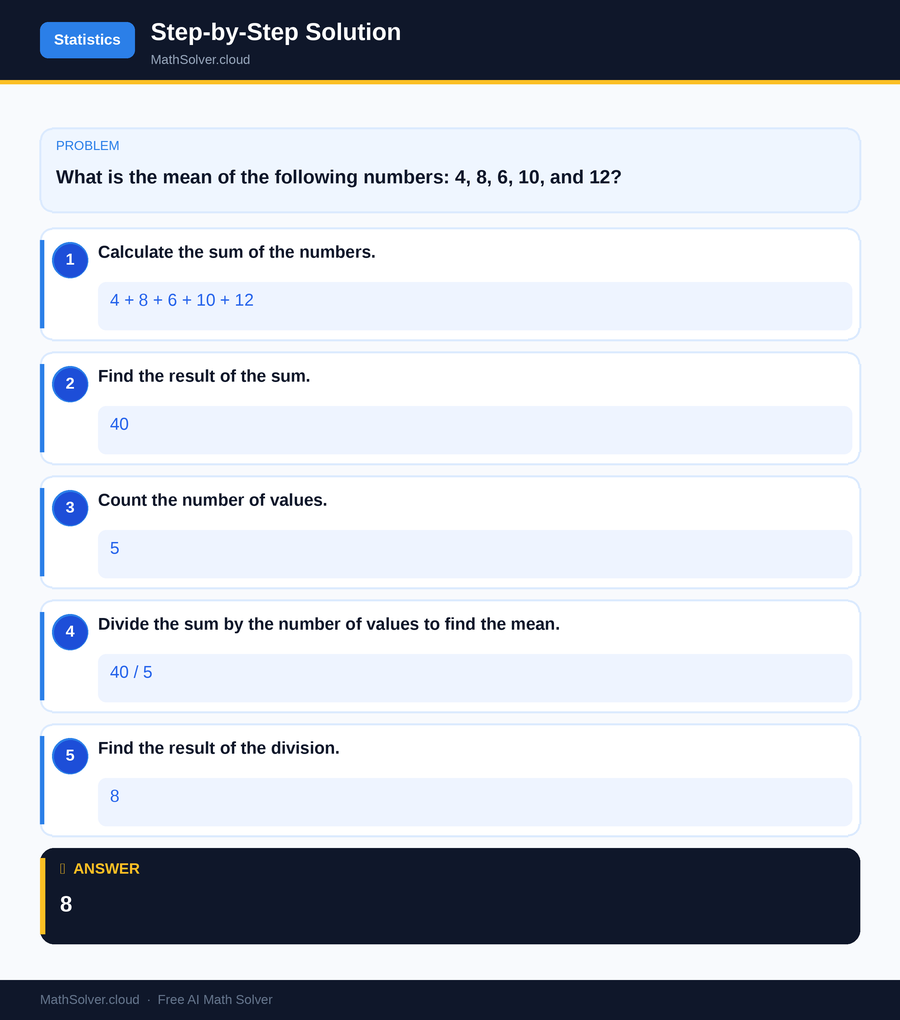
MathSolver Chrome extension solving this problem step-by-step
Example 2
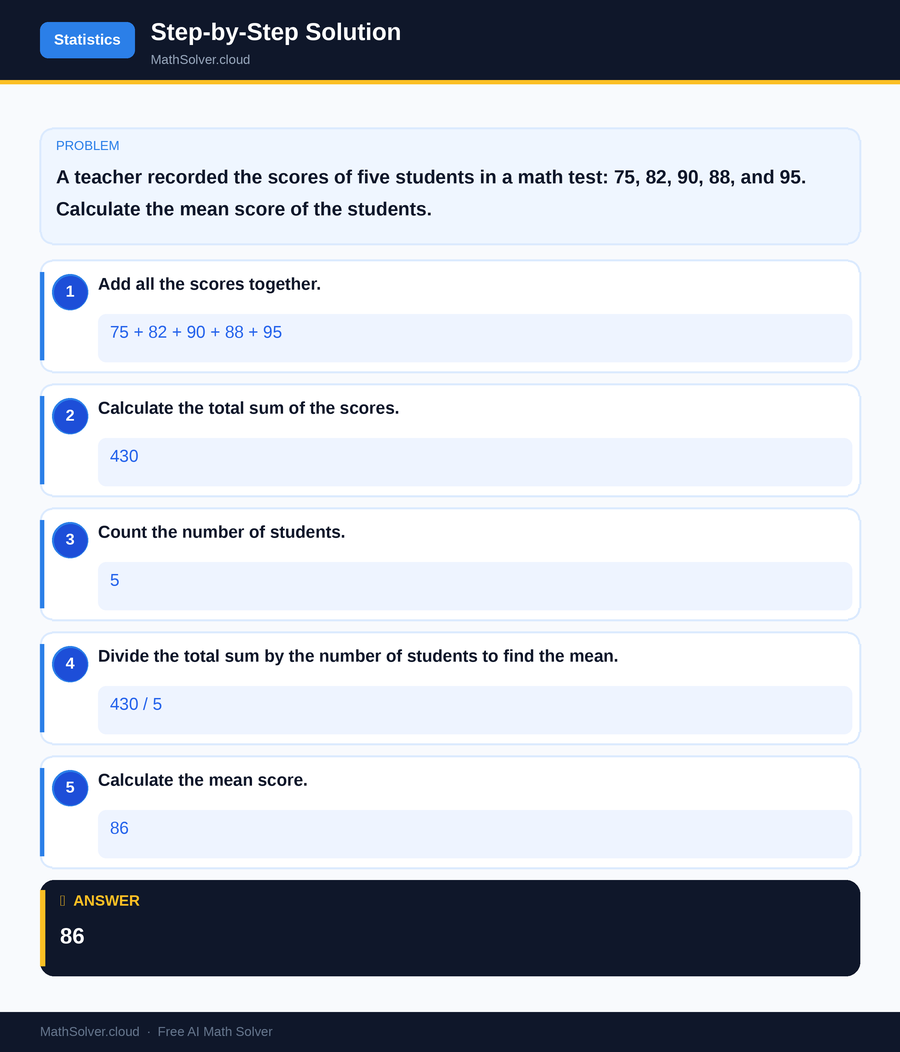
MathSolver Chrome extension solving this problem step-by-step
Common Mistakes to Avoid
One common mistake in calculating the mean is failing to accurately sum the data set. Given the critical role of the sum in the formula, any error here will lead to an incorrect mean. To avoid this, always double-check your addition and consider using a calculator for precision. Another frequent error is miscounting the number of data points, especially in larger data sets. Ensure that every number is accounted for and cross-verify your count.
Another pitfall is rounding numbers prematurely or incorrectly, which can skew your final result. Round your answers only in the final step, and do so according to the context of the problem or the required precision. By being mindful of these common errors, you can enhance the accuracy of your mean calculations.
Real-World Applications
The definition of mean in math is not just an academic exercise; it has practical applications in various fields. For instance, in economics, the mean is used to calculate average income, which helps in understanding economic trends and setting policies. Similarly, in education, mean scores are used to assess the overall performance of students and identify areas needing improvement.
In the business world, companies use the mean to determine average sales, helping them to strategize and make informed decisions. The mean also plays a role in quality control processes, where average defect rates are calculated to maintain product standards. These examples illustrate how the mean is an essential tool for data analysis and decision-making across multiple industries.
Frequently Asked Questions
❓ What is the definition of mean in math?
❓ Why is the mean important in statistics?
❓ How can AI help with the definition of mean in math?
❓ How does the mean differ from the median?
❓ How is the mean used in data analysis?
🚀 Solve any math problem instantly
2,000+ students use MathSolver every day — join them for free
📥 Add to Chrome — It's Free