Mastering Algebra with an Algebra Calculator
📋 In this guide
An algebra calculator is a powerful tool that assists students in solving algebraic equations efficiently and accurately. Algebra, often perceived as a challenging subject, involves manipulating symbols and numbers to solve equations and understand relationships between variables. Many students struggle with algebra due to its abstract nature and the necessity to grasp various concepts simultaneously. With an algebra calculator, these challenges can be mitigated as it provides step-by-step solutions, helping students not only find the correct answer but also understand the process involved in reaching it. In this article, we will explore how an algebra calculator can be your best friend in mastering algebraic concepts, offering a guide to using these calculators effectively and providing detailed examples to enhance your learning experience.
For students who find themselves overwhelmed by algebraic expressions, an algebra calculator can be a game-changer. By breaking down complex equations into manageable steps, these calculators demystify the problem-solving process, allowing learners to focus on understanding rather than on arithmetic errors. As we delve deeper into this topic, you'll discover how to use an algebra calculator with steps to navigate through algebraic problems with confidence. Additionally, we'll touch on some specific types of algebra calculators, such as the boolean algebra calculator and the mathpapa algebra calculator, which cater to different needs and preferences.
By the end of this article, you'll be equipped with the knowledge to utilize an algebra calculator online effectively, avoiding common pitfalls and appreciating its real-world applications. Whether you're prepping for an exam like the algebra 1 regents or working through an edmentum mastery test for algebra 1, the insights you gain here will be invaluable. So, let's dive into the world of algebra calculators and unlock their potential for your mathematical journey.
Step-by-Step: How to Solve Algebra Calculator
Step 1: Understanding the Equation
Before using an algebra calculator, it's essential to comprehend the equation you're dealing with. Whether you're working with a simple linear equation or a complex quadratic equation, start by identifying the type of problem. Recognize the constants and variables involved, and clarify the goal, such as finding the value of x. This initial understanding will help you input the equation correctly into the calculator and make sense of the steps provided in the solution.
Step 2: Inputting the Equation
Once you understand the equation, the next step is to input it into the algebra calculator. Most calculators require you to enter the equation as it appears, using symbols and numbers accurately. Ensure that you use appropriate parentheses to indicate the order of operations, especially in more complex equations. For instance, if you're using an algebra calculator online, follow the platform's specific guidelines for inputting equations to avoid errors.
Step 3: Analyzing the Solution Steps
After entering the equation, the algebra calculator will provide step-by-step solutions. Pay close attention to each step, as this is where the learning happens. The calculator will show how to manipulate the equation, such as adding or subtracting terms on both sides or dividing to isolate the variable. By analyzing these steps, you can understand the logic behind the solution, making it easier to tackle similar problems in the future.
Step 4: Verifying the Solution
Once you've reviewed the steps and arrived at a solution, it's crucial to verify it. You can do this by substituting the solution back into the original equation to see if it holds true. This verification step is a good practice, ensuring that you haven't overlooked any errors. Additionally, comparing the calculator's steps with your manual calculations can reinforce your understanding and build confidence in your algebraic skills.
🤖 Stuck on a math problem?
Take a screenshot and let our AI solve it step-by-step in seconds
⚡ Try MathSolver Free →Worked Examples
Example 1
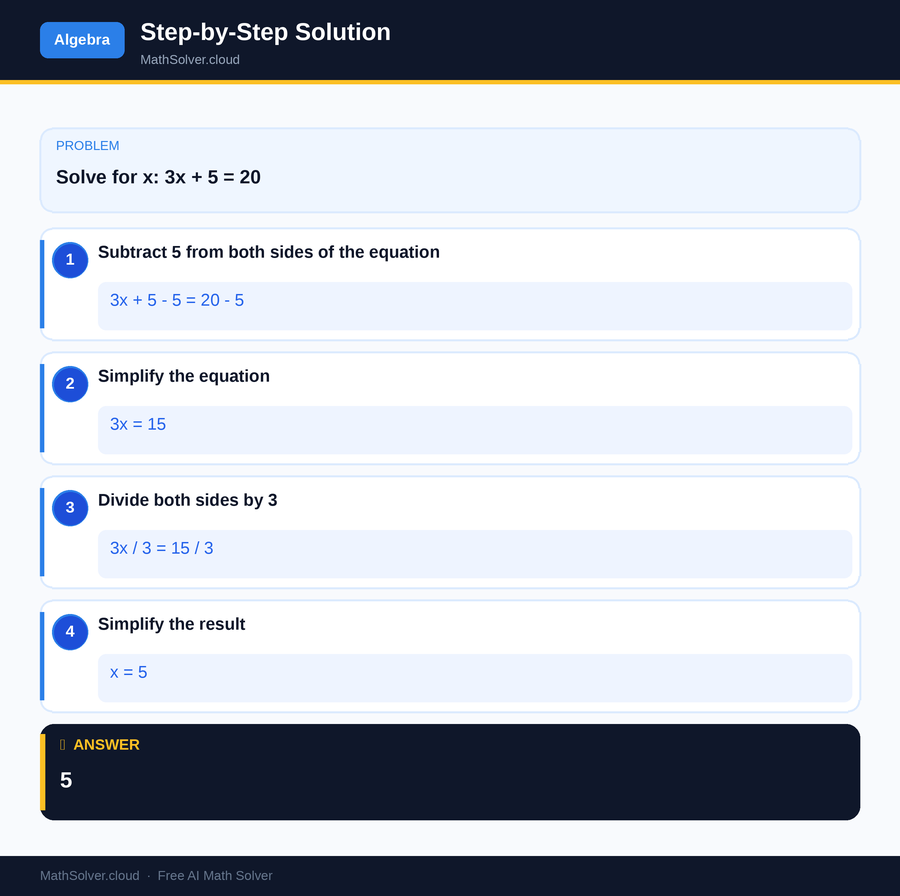
MathSolver Chrome extension solving this problem step-by-step
Example 2
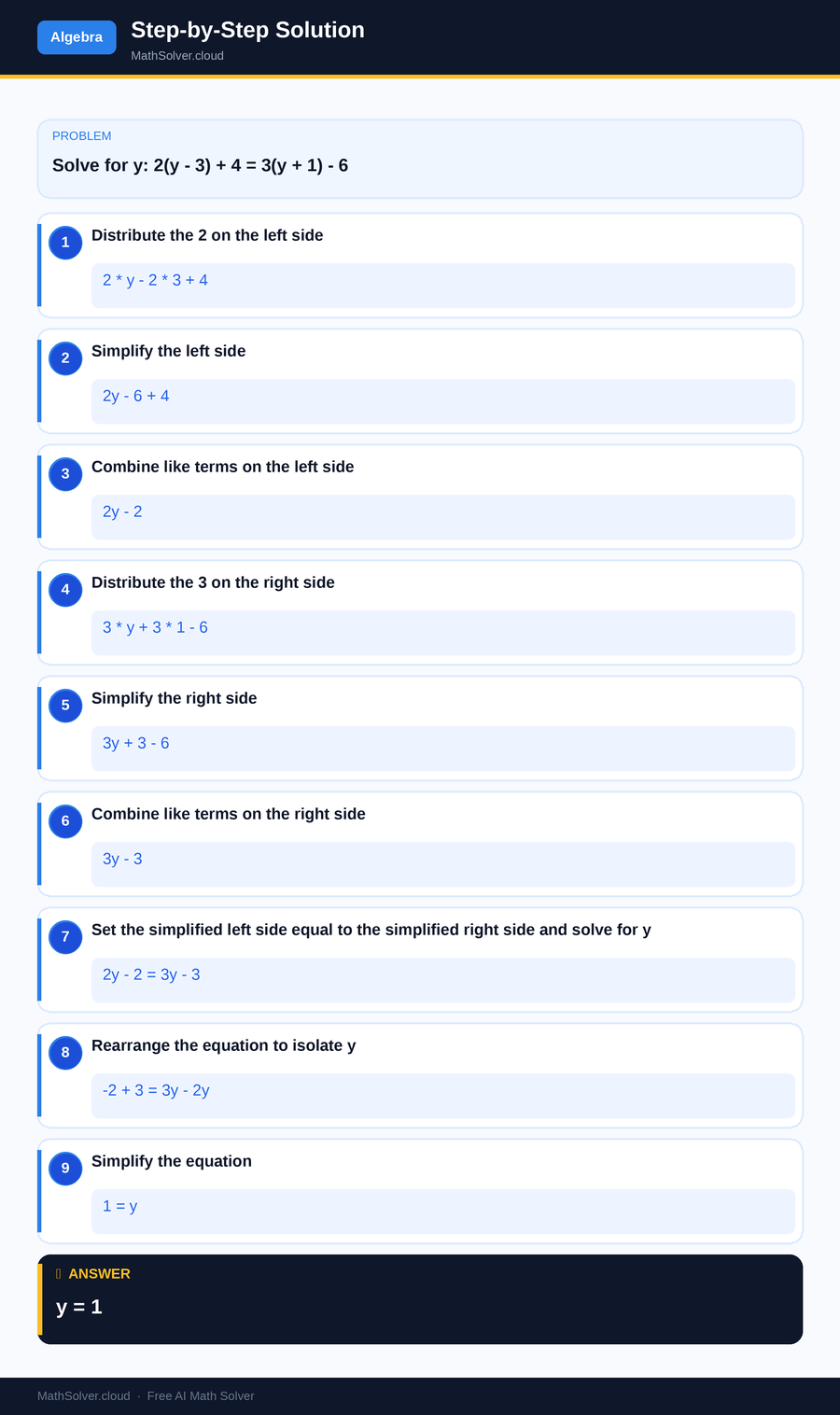
MathSolver Chrome extension solving this problem step-by-step
Common Mistakes to Avoid
A frequent mistake students make when using an algebra calculator is inputting the equation incorrectly. Misplacing parentheses or using the wrong operators can lead to incorrect solutions. To avoid this, double-check your input before proceeding. Another common error is relying too heavily on the calculator without understanding the steps involved. It's essential to engage with each step actively, ensuring that you comprehend the logic and can apply it independently in different contexts.
Another pitfall is neglecting to verify solutions. Always substitute your answer back into the original equation to confirm its accuracy. This practice helps identify any errors and reinforces your understanding of the process. By being mindful of these common mistakes and taking steps to avoid them, you can make the most of your algebra calculator and enhance your problem-solving skills.
Real-World Applications
Algebra calculators are not just tools for academic exercises; they have practical applications in various fields. In finance, for instance, professionals use algebraic equations to calculate interest rates, loan payments, and investment growth. An algebra calculator can simplify these complex calculations, ensuring accuracy and efficiency in financial analyses.
In engineering, algebra is essential for designing and analyzing systems. Engineers use algebraic equations to solve problems related to force, motion, and energy. An algebra calculator can help streamline these calculations, making it easier to test different scenarios and optimize designs. By understanding these real-world applications, students can appreciate the value of algebra calculators beyond the classroom.
Frequently Asked Questions
❓ How can an algebra calculator help me with my homework?
❓ What are the best practices for using an algebra calculator effectively?
❓ How can AI help with algebra calculators?
❓ Can I use an algebra calculator for exams like the algebra 1 regents?
❓ How does a boolean algebra calculator differ from a regular algebra calculator?
🚀 Solve any math problem instantly
2,000+ students use MathSolver every day — join them for free
📥 Add to Chrome — It's Free