Understanding Math Problem
📋 In this guide
A math problem is a challenge that requires using mathematical concepts and operations to find a solution. Students often grapple with math problems because they can be complex and require a strong grasp of various mathematical principles. In this article, we'll explore how to approach math problems effectively, learn some strategies to solve them, and understand why they can be so challenging. Whether you're dealing with basic arithmetic or hard math problems, this guide aims to make your journey smoother and more enjoyable.
Math problems can range from simple calculations to the hardest math problem that involves multiple steps and concepts. Many students find themselves stuck because they may not know which mathematical operation to use or how to apply it correctly. By the end of this article, you'll have a clearer understanding of how to decipher math problems and tackle them with confidence.
We'll provide you with a step-by-step guide, worked examples, and highlight common mistakes to avoid. Additionally, you'll learn how math problems apply to real-world scenarios and how tools like the MathSolver Chrome extension can assist in finding solutions. Embrace the challenge with our comprehensive guide and enhance your problem-solving skills today!
Step-by-Step: How to Solve Math Problem
Step 1: Understand the Problem
The first step to solving any math problem is thoroughly understanding what is being asked. Carefully read the problem statement and identify key information such as numbers, units, and what you need to find. Ask yourself questions like: What is the problem asking me to solve? Are there any specific conditions or constraints? This initial comprehension is crucial as it guides you in selecting the right approach to solving the problem.
Step 2: Devise a Plan
Once you understand the math problem, the next step is to devise a plan of action. Determine which mathematical operations or formulas are required. Is it a simple addition problem, or does it involve multiple steps like division and multiplication? Also, consider if drawing a diagram or writing down the known data might help you visualize the problem better. Planning your approach lays a solid foundation for the next steps.
Step 3: Execute the Plan
With a clear plan in place, proceed by executing the steps you have outlined. Carry out the calculations methodically, ensuring you follow the order of operations (PEMDAS/BODMAS), which stands for Parentheses/Brackets, Exponents/Orders, Multiplication and Division (from left to right), Addition and Subtraction (from left to right). Double-check each calculation to avoid errors, and keep track of units if applicable.
Step 4: Review and Verify
After obtaining a solution, take the time to review each step and verify the result. Does the answer make sense in the context of the math problem? Re-evaluate your calculations and logic. If possible, use a different method to cross-verify the result. This step is essential in ensuring accuracy and building confidence in your problem-solving abilities.
🤖 Stuck on a math problem?
Take a screenshot and let our AI solve it step-by-step in seconds
⚡ Try MathSolver Free →Worked Examples
Example 1
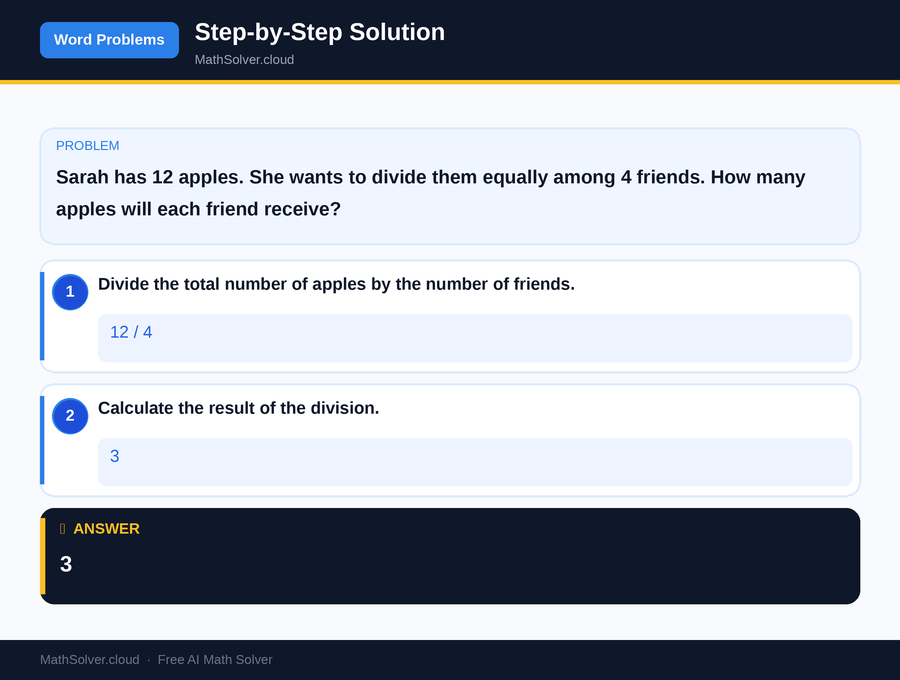
MathSolver Chrome extension solving this problem step-by-step
Example 2
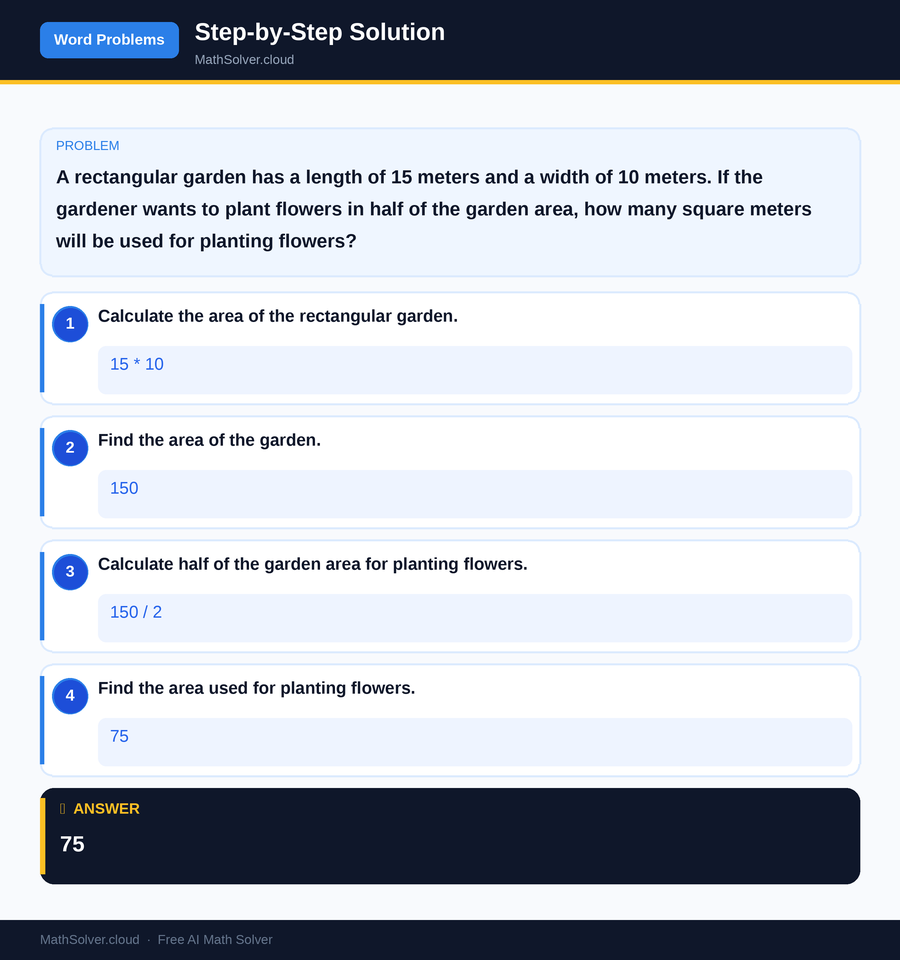
MathSolver Chrome extension solving this problem step-by-step
Common Mistakes to Avoid
One common mistake when solving math problems is misreading the problem statement. This can lead to using incorrect formulas or operations, resulting in wrong answers. To avoid this, take your time to read the problem carefully and highlight or underline key information. Another frequent error is neglecting the order of operations, which can drastically change the outcome of calculations. Ensure you always perform operations in the correct sequence to maintain accuracy.
Students also sometimes rush through calculations, leading to simple arithmetic errors. Always double-check your work, especially in hard math problems where multiple steps are involved. Keeping your work organized and checking each step can prevent these mistakes and ensure you arrive at the correct solution.
Real-World Applications
Math problems are not just confined to textbooks; they have numerous real-world applications. For instance, in architecture and engineering, solving math problems is essential for designing structures that are safe and efficient. Calculating areas, volumes, and loads are common tasks that require strong problem-solving skills.
In finance, math problems help in budgeting, forecasting, and analyzing financial data. Understanding how to solve these problems enables better decision-making and strategic planning. Whether you're working out a budget for a household or analyzing investment opportunities, math problem-solving skills play a critical role in achieving accurate and effective results.
Frequently Asked Questions
❓ What is a math problem?
❓ Why do students struggle with math problems?
❓ How can AI help with math problem solving?
❓ What are some strategies for solving hard math problems?
❓ How can I use math problem solving in everyday life?
🚀 Solve any math problem instantly
2,000+ students use MathSolver every day — join them for free
📥 Add to Chrome — It's Free