Conquering Hard Math Problems
📋 In this guide
Hard math problems are often the bane of many students' academic experiences. These challenging problems can range from complex algebraic equations to intricate calculus problems, each requiring a unique set of skills and logical reasoning to solve. Students often struggle with hard math problems because they require not just rote learning but a deep understanding of mathematical concepts and the ability to apply these concepts in various contexts. In this article, we aim to demystify hard math problems by breaking down the process into manageable steps, providing you with a clearer path to tackling these mathematical challenges with confidence.
Understanding hard math problems is crucial for academic success in mathematics and related fields. Many students find themselves overwhelmed by the complexity and abstract nature of these problems, which can lead to frustration and a lack of motivation. However, by developing a structured approach and practicing regularly, you can improve your problem-solving skills and gain the confidence needed to tackle even the most challenging math problems. This article will guide you through essential strategies and provide practical examples to help you master hard math problems.
By the end of this guide, you will have a better understanding of how to approach hard math problems, the common pitfalls to avoid, and the real-world applications of these skills. Whether you are preparing for exams, completing math 1324 homework answers, or simply looking to improve your mathematical prowess, this article will serve as a valuable resource. Let's dive into the world of hard math problems and learn how to conquer them effectively.
Step-by-Step: How to Solve Hard Math Problems
Step 1: Understand the Problem
The first step in tackling hard math problems is to thoroughly understand the problem statement. This involves identifying what is being asked, the information given, and any constraints or conditions. Carefully read the problem multiple times if necessary, and highlight or jot down key information. For example, when solving word problems, pay attention to units of measure, relationships between quantities, and specific numerical values provided.
Step 2: Develop a Plan
Once you understand the problem, the next step is to devise a plan for solving it. This involves selecting appropriate formulas or methods that apply to the problem. Consider similar problems you've encountered before and think about the strategies that worked. For instance, if the problem involves distance and speed, you might plan to use the distance formula (Distance = Speed x Time) to find the solution. Creating a step-by-step outline of your approach can help organize your thoughts and streamline the problem-solving process.
Step 3: Execute the Plan
With a clear plan in place, proceed to execute it by performing the necessary calculations or logical reasoning steps. This stage requires careful attention to detail, as small mistakes can lead to incorrect answers. Work through each step methodically, double-checking your calculations and ensuring that you are following the plan accurately. If you encounter difficulties, revisit your plan to see if adjustments are needed.
Step 4: Review and Reflect
After obtaining a solution, take the time to review your work and reflect on the process. Verify that your answer makes sense in the context of the problem and that all calculations were performed correctly. Consider if there are alternative methods that could have been used or if there are insights to be gained from the problem. Reflecting on your approach helps reinforce learning and prepares you for tackling similar problems in the future.
🤖 Stuck on a math problem?
Take a screenshot and let our AI solve it step-by-step in seconds
⚡ Try MathSolver Free →Worked Examples
Example 1
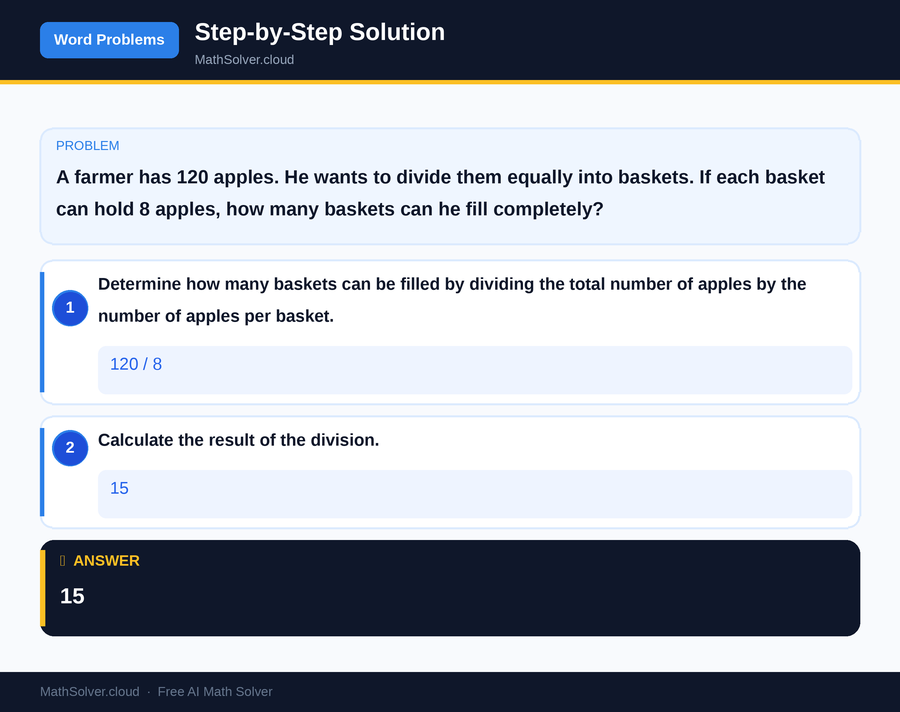
MathSolver Chrome extension solving this problem step-by-step
Example 2
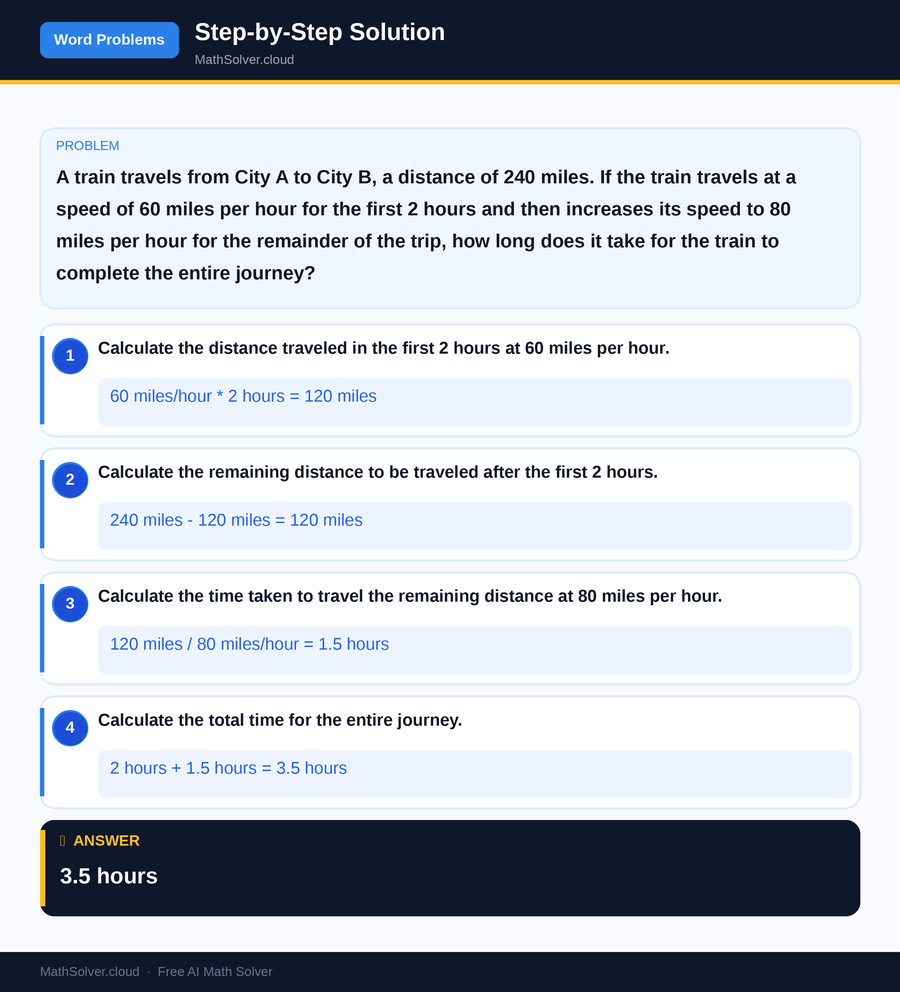
MathSolver Chrome extension solving this problem step-by-step
Common Mistakes to Avoid
One common mistake students make when solving hard math problems is misinterpreting the problem statement. This can lead to incorrect assumptions and, ultimately, the wrong solution. To avoid this, take the time to read the problem carefully and ensure you understand what is being asked. Highlight key information and review the problem statement multiple times.
Another frequent error is skipping steps or performing calculations hastily. This often results in small errors that can have a significant impact on the final answer. To prevent this, work through each step methodically and double-check your calculations. Writing out each step of your solution can help clarify your thought process and reduce the likelihood of mistakes.
Real-World Applications
Hard math problems are not just academic exercises; they have numerous real-world applications. For example, engineers use complex calculations to design safe and efficient structures, while economists employ mathematical models to analyze market trends and forecast economic conditions. Similarly, scientists rely on advanced mathematics to conduct research and develop new technologies.
In fields such as data science and computer programming, solving hard math problems is essential for developing algorithms and interpreting data. These skills enable professionals to create innovative solutions and make informed decisions based on quantitative analysis. Whether it's optimizing supply chains or improving machine learning models, the ability to tackle hard math problems is a valuable asset in today's technology-driven world.
Frequently Asked Questions
❓ What makes hard math problems difficult?
❓ How can I improve my skills in solving hard math problems?
❓ How can AI help with hard math problems?
❓ Are there specific strategies for tackling word problems?
❓ How can rational reasoning online homework answers support learning?
🚀 Solve any math problem instantly
2,000+ students use MathSolver every day — join them for free
📥 Add to Chrome — It's Free