Math Homework Help: A Comprehensive Guide
📋 In this guide
Math homework help is essential for students who find themselves struggling with mathematical problems and concepts. The journey through math can sometimes feel like navigating a maze, with each problem presenting its own unique challenge. Many students find themselves overwhelmed by the complexity of math assignments, which can include anything from basic arithmetic to more advanced topics like calculus and statistics. This article aims to demystify the process by providing math homework help through clear explanations, step-by-step guides, and practical examples.
Students often struggle with math homework for a variety of reasons. Some might find the abstract nature of math concepts difficult to grasp, while others might have gaps in their foundational knowledge. Time constraints and a lack of resources can also contribute to the struggle. Our goal is to equip you with strategies and tools that will make tackling math homework less daunting. By the end of this article, you'll have a clearer understanding of how to approach math problems effectively.
In the following sections, we will introduce key formulas and definitions, provide a step-by-step guide to solving problems, and present worked examples that you can follow along with. We will also address common mistakes students make and how to avoid them, as well as discuss the real-world applications of math skills. Let's dive into the world of math homework help and make solving math problems a more manageable and even enjoyable task.
Step-by-Step: How to Solve Math Homework Help
Step 1: Understand the Problem
The first step in solving any math problem is to thoroughly understand what is being asked. Read the problem carefully, identify the key components, and determine what you are solving for. For instance, in a word problem, highlight or underline important information such as numbers, units, and specific questions. This will help you focus on the relevant details and avoid unnecessary confusion.
Step 2: Choose the Right Approach
Once you have a clear understanding of the problem, decide on the best approach to solve it. This might involve selecting the appropriate formula or method that applies to the situation. For example, if you're dealing with a problem involving percentages, you'll need to recall how to convert percentages to decimals and apply them correctly. It's important to align your approach with the problem's requirements to ensure accuracy.
Step 3: Execute the Solution
Now it's time to perform the necessary calculations and solve the problem. Ensure that you follow the mathematical order of operations: parentheses, exponents, multiplication and division (from left to right), and addition and subtraction (from left to right). Write down each step clearly to avoid mistakes and keep track of your progress. Double-check your work to ensure accuracy before arriving at a final answer.
Step 4: Verify Your Answer
After solving the problem, take a moment to review your solution and verify its correctness. Check if your answer makes sense in the context of the problem and if all calculations were performed correctly. Revisiting the problem and solution can help catch any errors and reinforce your understanding of the process. This step is crucial in developing confidence and ensuring reliability in your math skills.
🤖 Stuck on a math problem?
Take a screenshot and let our AI solve it step-by-step in seconds
⚡ Try MathSolver Free →Worked Examples
Example 1
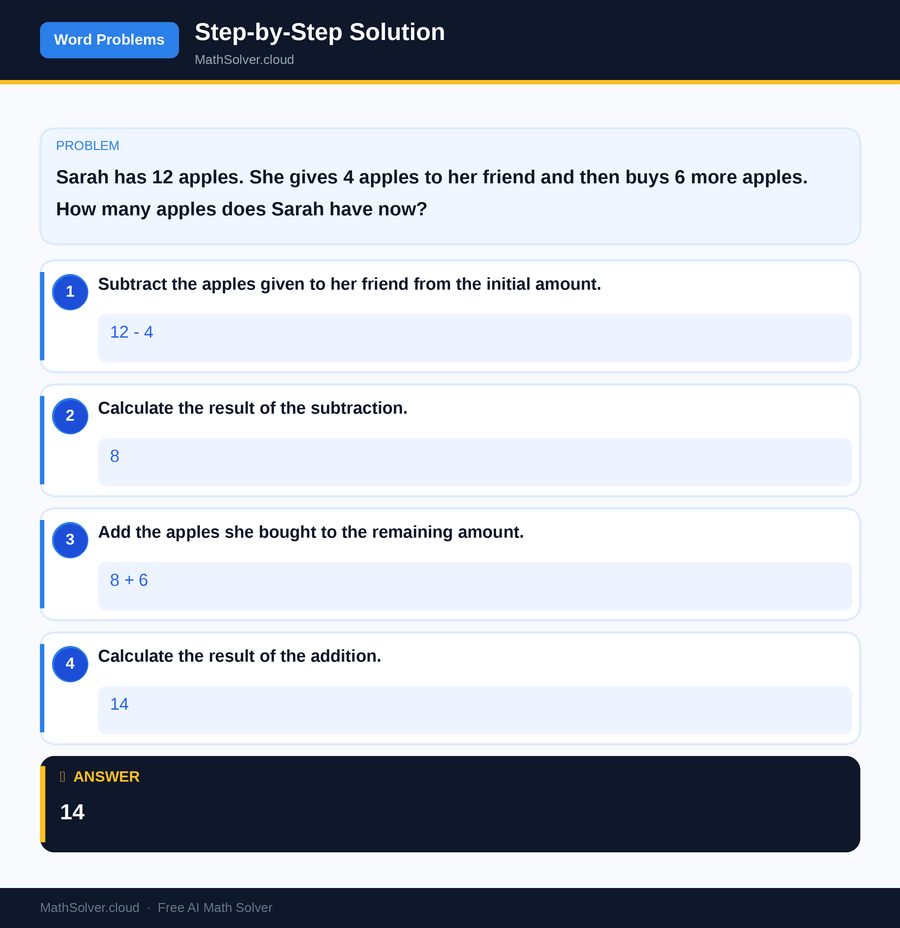
MathSolver Chrome extension solving this problem step-by-step
Example 2
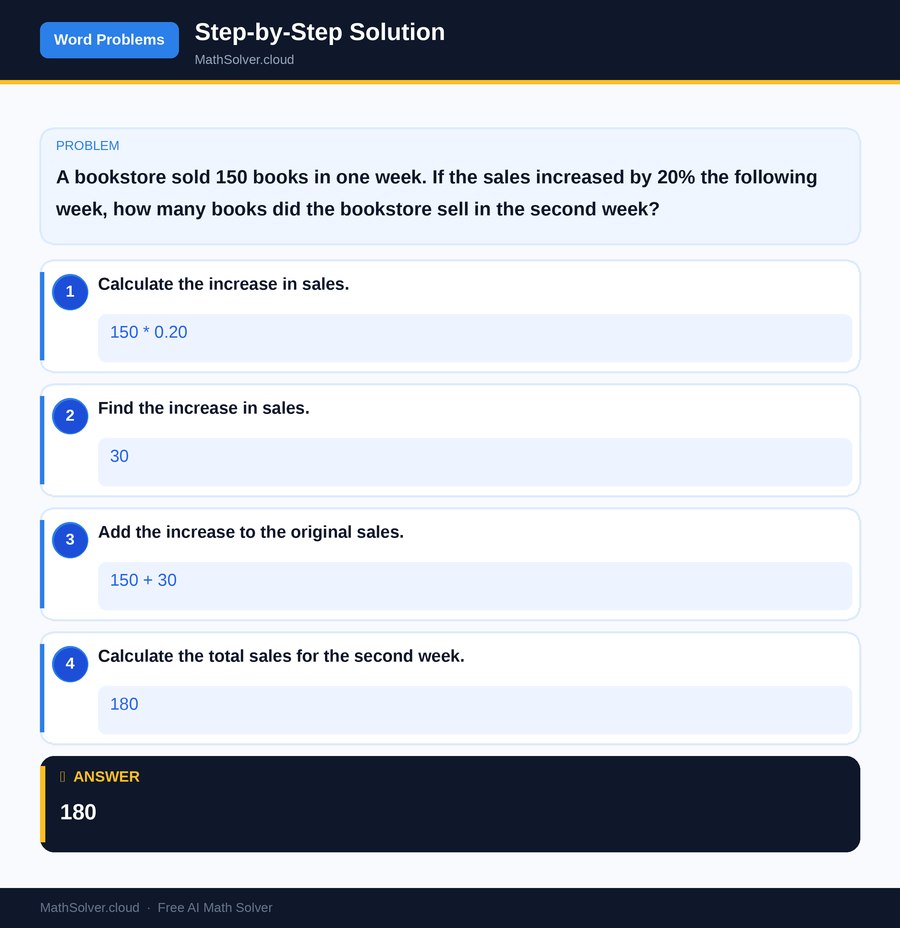
MathSolver Chrome extension solving this problem step-by-step
Common Mistakes to Avoid
One common mistake students make is not fully understanding the problem before attempting to solve it. This can lead to misinterpretation and incorrect solutions. To avoid this, always take the time to read the problem carefully and identify key information before jumping into calculations.
Another common error is neglecting the order of operations, which can result in incorrect answers. Always remember to follow the order of operations, often remembered by the acronym PEMDAS (Parentheses, Exponents, Multiplication and Division, Addition and Subtraction). By adhering to this sequence, you ensure that calculations are performed in the correct order, leading to accurate results.
Real-World Applications
Math homework help is not just about solving problems on paper; it has real-world applications that are incredibly valuable. For example, budgeting and financial planning require a solid understanding of basic arithmetic and percentages. These skills enable individuals to manage their finances effectively, making informed decisions about spending and saving.
In the field of engineering, math is used to design structures and solve complex problems related to forces and materials. Understanding mathematical principles is crucial for engineers to ensure the safety and functionality of their designs. By mastering math homework, students prepare themselves for careers that rely heavily on mathematical reasoning and problem-solving.
Frequently Asked Questions
❓ What is the best way to find math homework help?
❓ Why do so many students struggle with math homework?
❓ How can AI help with math homework help?
❓ What are some effective study strategies for math homework?
❓ How can I improve my problem-solving skills for math homework?
🚀 Solve any math problem instantly
2,000+ students use MathSolver every day — join them for free
📥 Add to Chrome — It's Free