Comprehensive Guide to Using a Math Solver
📋 In this guide
A math solver is a digital tool designed to help students and professionals solve mathematical problems efficiently. From algebraic equations to complex calculus problems, a math solver can handle a variety of challenges that students often find daunting. Many students struggle with mathematics due to the abstract nature of the subject and the need for a strong foundation in fundamental concepts. These difficulties can lead to frustration and a lack of confidence. However, with the right tools and guidance, anyone can improve their math skills.
In this article, you'll learn how a math solver works, the steps to effectively utilize one, and the benefits it offers. We'll go over key formulas, step-by-step instructions, and even tackle some example problems. Whether you're a student looking to boost your grades or a professional needing a quick solution, understanding how to use a math solver can be incredibly beneficial.
By the end of this article, you'll have a clear understanding of what a math solver is and how it can be an indispensable tool in your educational toolkit. You'll also discover how modern advancements like AI math solvers and math solver scanners can enhance problem-solving efficiency. With the right approach, solving math problems can become a rewarding and less stressful experience.
Step-by-Step: How to Solve Math Solver
Step 1: Understanding the Problem
The first step in using a math solver is to thoroughly understand the problem you are trying to solve. Read the problem statement carefully and identify the type of math involved, whether it's algebra, geometry, calculus, or another branch. Determine what the problem is asking for and note down any given information, such as numbers or formulas.
Step 2: Inputting the Problem
Once you have a clear understanding of the problem, the next step is to input it into the math solver. This can be done manually by typing the equation into a software interface or by using a math solver scanner, which allows you to take a picture of the problem. Tools like the Microsoft Math Solver and other AI math solvers make this process quick and efficient. Ensure that the input is accurate to avoid errors in the solution.
Step 3: Analyzing the Solution
After inputting the problem, the math solver will process the information and provide a solution. Take the time to analyze this solution step-by-step. Most math solvers will break down the process, showing each stage of the calculation. This is an excellent opportunity to learn and understand the methodology behind the solution. If you are using a math solver AI tool, you might even get a detailed explanation of each step.
Step 4: Applying the Solution
The final step is applying the solution to your specific context. If the problem was part of a larger assignment or project, ensure that the solution fits within that framework. Double-check your work for accuracy and consistency. Using the solution provided by the math solver, you can cross-verify with manual calculations if needed. This reinforces your understanding and ensures that you are not solely reliant on the technology.
🤖 Stuck on a math problem?
Take a screenshot and let our AI solve it step-by-step in seconds
⚡ Try MathSolver Free →Worked Examples
Example 1

MathSolver Chrome extension solving this problem step-by-step
Example 2
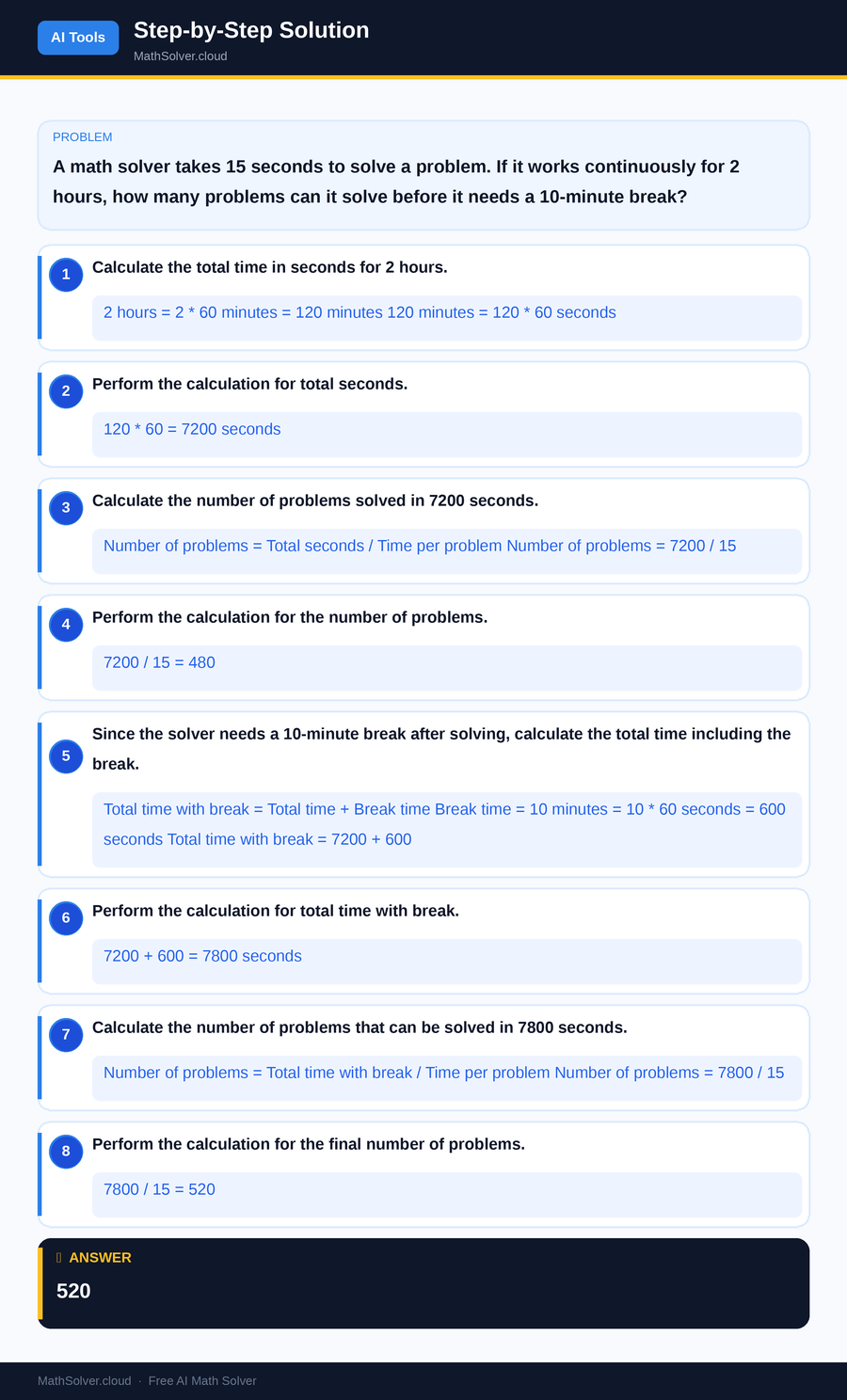
MathSolver Chrome extension solving this problem step-by-step
Common Mistakes to Avoid
One of the most common mistakes students make when using a math solver is inputting the problem incorrectly. Even a small typo or misplaced symbol can lead to incorrect solutions. To avoid this, always double-check your input for accuracy. Another frequent error is relying too heavily on the math solver without trying to understand the solution process. This can lead to a lack of comprehension and the inability to solve similar problems independently.
To avoid these pitfalls, always take the time to review the solution provided by the math solver and try to work through it manually. Using the math solver as a learning tool rather than just a shortcut will enhance your understanding and proficiency in mathematics.
Real-World Applications
Math solvers are widely used in educational settings, helping students understand complex concepts and complete assignments efficiently. They're also invaluable in fields such as engineering, where precise calculations are crucial. For example, engineers might use a math solver to quickly verify calculations during the design process.
In the world of finance, math solvers assist analysts in performing data-driven calculations to forecast trends and make economic predictions. The integration of AI into these tools, like the MathSolver Chrome extension, has further expanded their applications, offering instant solutions and insights across various industries.
Frequently Asked Questions
❓ What is a math solver and how does it work?
❓ Why do students struggle with using math solvers?
❓ How can AI help with math solver?
❓ What are some popular math solver tools?
❓ Can a math solver be used during exams?
🚀 Solve any math problem instantly
2,000+ students use MathSolver every day — join them for free
📥 Add to Chrome — It's Free