Mastering Mathematics with Math AI
📋 In this guide
Math AI, or artificial intelligence applied to mathematics, is revolutionizing how students engage with complex mathematical concepts. Math AI encompasses advanced algorithms and machine learning techniques designed to solve mathematical problems, simulate human-like reasoning, and provide step-by-step solutions. Students often struggle with math AI for a variety of reasons, including the abstract nature of mathematics and the rapid advancements in AI technology that can be difficult to keep up with. However, understanding how math AI works can open doors to more efficient learning and problem-solving strategies.
Within this article, we will explore how math AI can assist students in mastering mathematical concepts and improving their computational skills. We'll delve into the core formulas and definitions related to math AI and guide you through step-by-step processes that demonstrate its practical applications. Whether you are new to math AI or looking to enhance your understanding, this guide will provide valuable insights into how you can leverage this technology to excel in mathematics.
By the end of this article, you'll have a clearer understanding of math AI, its key formulas, and how to apply it effectively to solve problems. From understanding the best math AI tools available to avoiding common mistakes, we'll cover everything you need to know to make the most of math AI in your studies. Along the way, we'll highlight resources like our complete AI Tools & Comparison guide to ensure you have access to the best tools and strategies available.
Step-by-Step: How to Solve Math Ai
Step 1: Understanding the Problem
The first step in utilizing math AI effectively is to clearly understand the problem at hand. Identify the mathematical concepts involved and determine which AI tools or algorithms are best suited for solving the problem. For instance, if you're working on algebraic equations, a math ai solver like Symbolab or Photomath software can be extremely helpful. Assess whether the problem involves basic arithmetic, calculus, or data processing, as this will guide you in selecting the appropriate AI tool.
Step 2: Selecting the Right Tool
Once you understand the problem, select the best math AI tool that can provide the most accurate and efficient solution. There are numerous options available, including Microsoft Math Solver, Wolfram Alpha, and free tools like MathSolver Chrome extension. Each tool has unique features and capabilities, so it's essential to choose one that aligns with your specific needs. For instance, if you require a step-by-step solution, tools like Photomath or Symbolab are excellent choices.
Step 3: Inputting the Problem
After selecting the tool, the next step is to input the problem accurately. Ensure that you enter all mathematical expressions correctly, paying attention to parentheses and the order of operations. Many math AI solvers allow you to take a photo of the problem or input it manually. Double-check the input to avoid errors and ensure the AI interprets the problem as intended. This step is crucial for obtaining an accurate solution.
Step 4: Analyzing the Solution
Once the AI tool provides a solution, carefully analyze the result and the steps involved. Understanding each step is vital for learning and applying the concept to similar problems in the future. If the solution includes explanations, take the time to read through them and clarify any uncertainties. This analysis not only aids comprehension but also prepares you to tackle more complex problems independently.
🤖 Stuck on a math problem?
Take a screenshot and let our AI solve it step-by-step in seconds
⚡ Try MathSolver Free →Worked Examples
Example 1
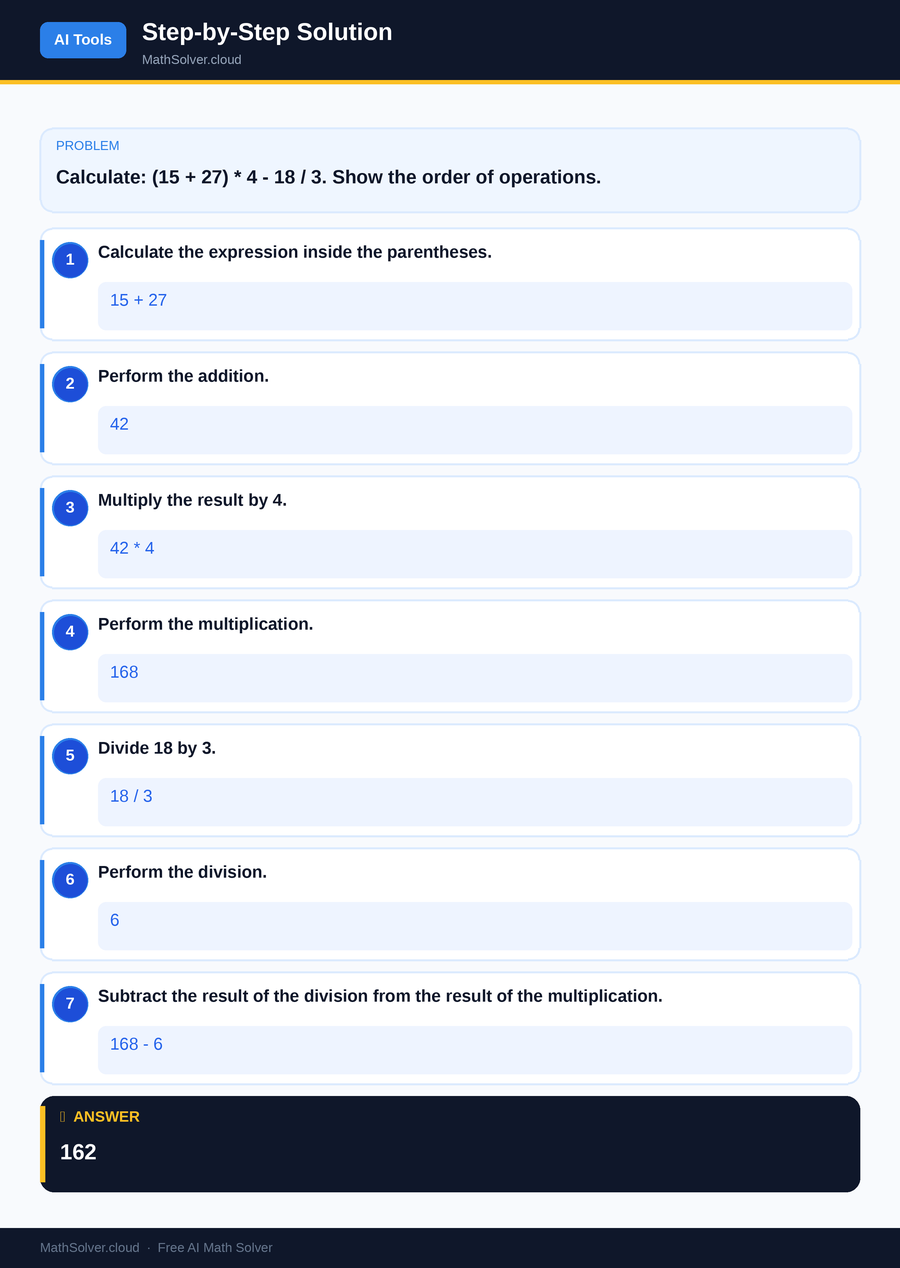
MathSolver Chrome extension solving this problem step-by-step
Example 2
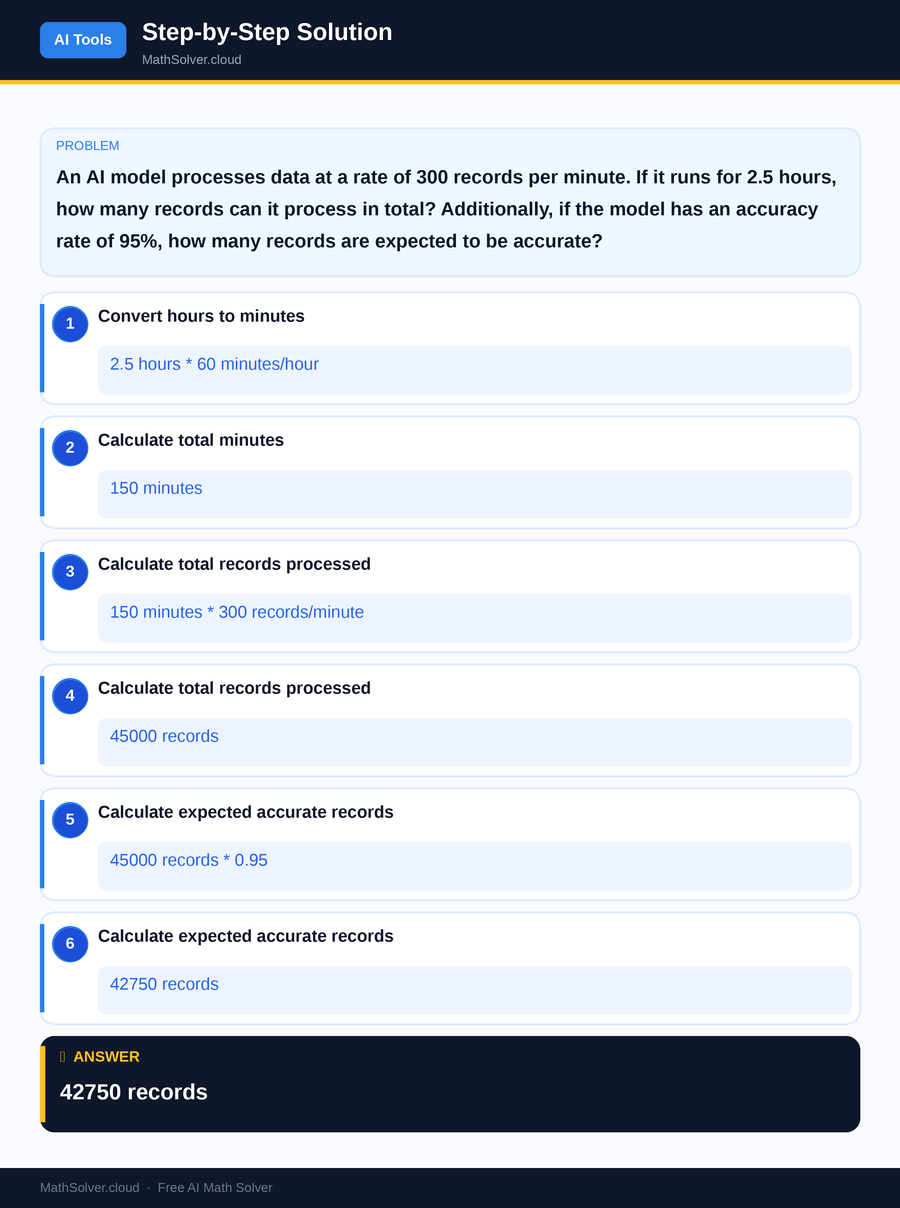
MathSolver Chrome extension solving this problem step-by-step
Common Mistakes to Avoid
One common mistake students make when using math AI is misinterpreting the order of operations. It's crucial to follow the PEMDAS rule to ensure calculations are performed correctly. Another frequent error is entering the problem incorrectly into the AI tool. This can lead to inaccurate solutions and increased frustration. To avoid these mistakes, double-check your inputs and familiarize yourself with the AI tool's interface.
Additionally, students may rely too heavily on AI tools without understanding the underlying concepts. While math AI can provide quick solutions, it's essential to grasp the fundamental principles to apply them effectively in exams and real-world scenarios. Use AI as a supplement to your learning, not a replacement for understanding.
Real-World Applications
Math AI is used in various real-world applications, from educational tools to advanced scientific research. In education, tools like Symbolab and Photomath software help students learn by providing instant solutions and explanations for complex problems. These applications empower students to learn at their own pace and reinforce their understanding of mathematical concepts.
In industry, math AI plays a critical role in data analysis, finance, and engineering. For instance, AI algorithms are used to optimize supply chains, predict financial trends, and simulate engineering designs. By automating complex calculations and analyses, math AI enhances efficiency and accuracy in these fields, leading to significant advancements and innovations.
Frequently Asked Questions
❓ What is math AI?
❓ Why do students struggle with math AI?
❓ How can AI help with math AI?
❓ What are some recommended math AI tools?
❓ How can math AI be used in real life?
🚀 Solve any math problem instantly
2,000+ students use MathSolver every day — join them for free
📥 Add to Chrome — It's Free